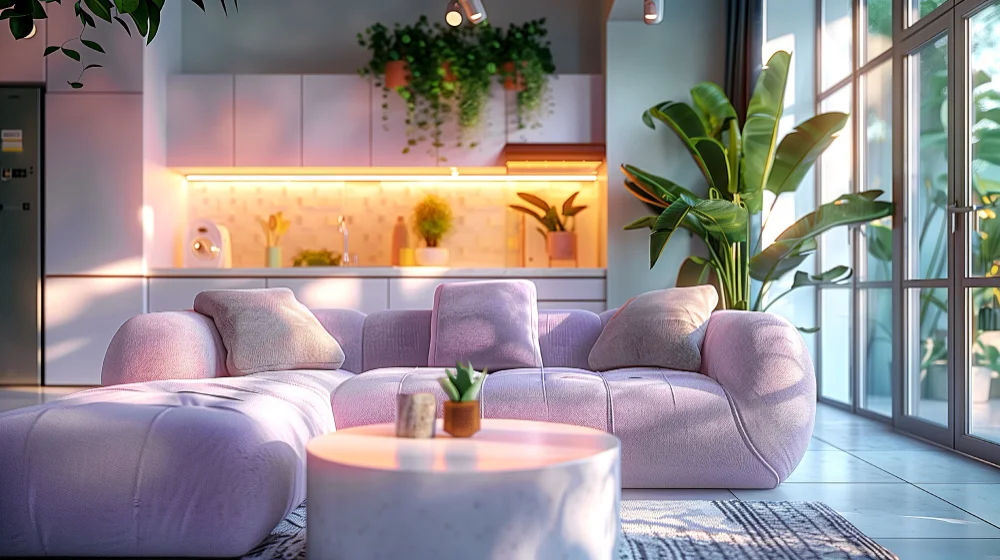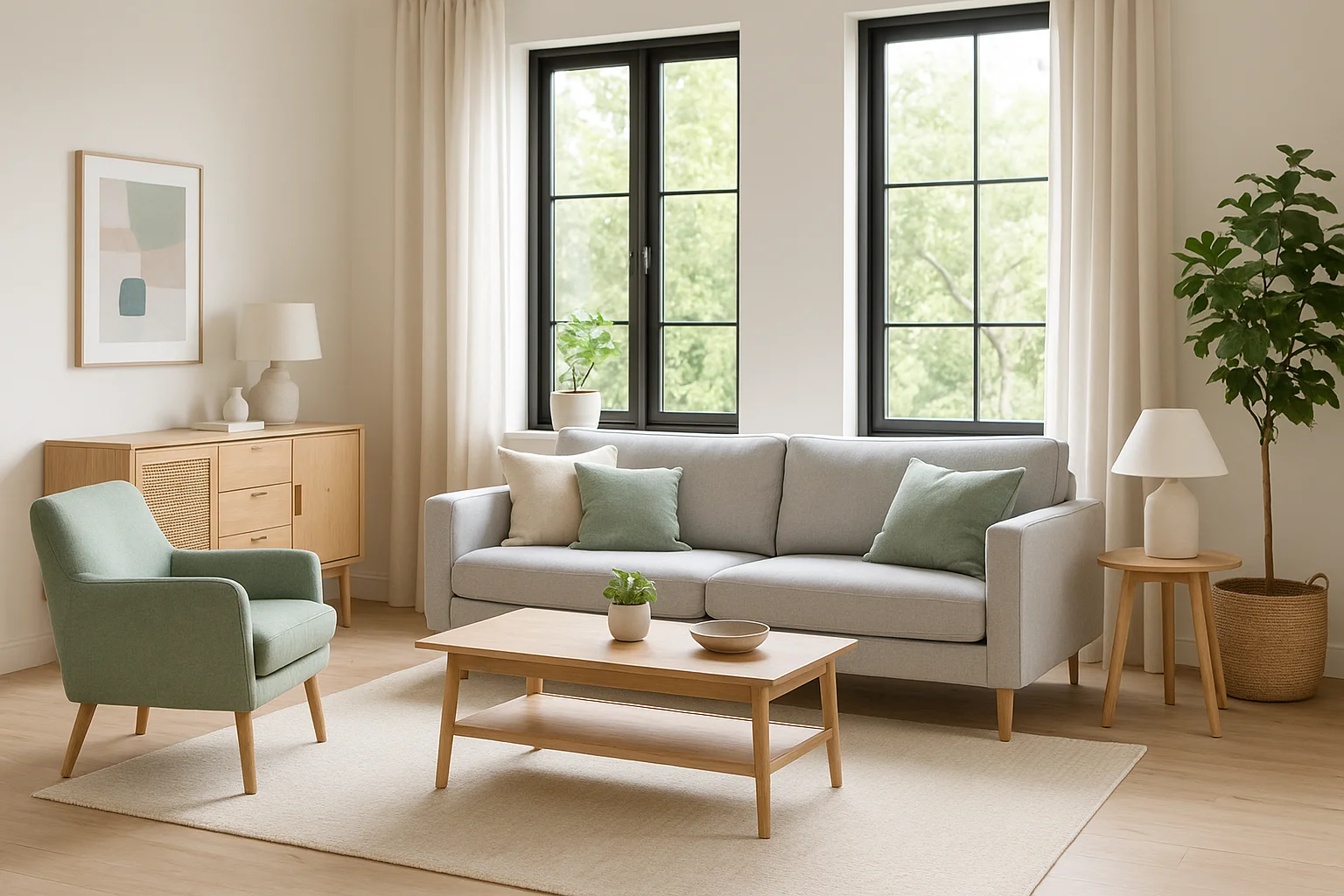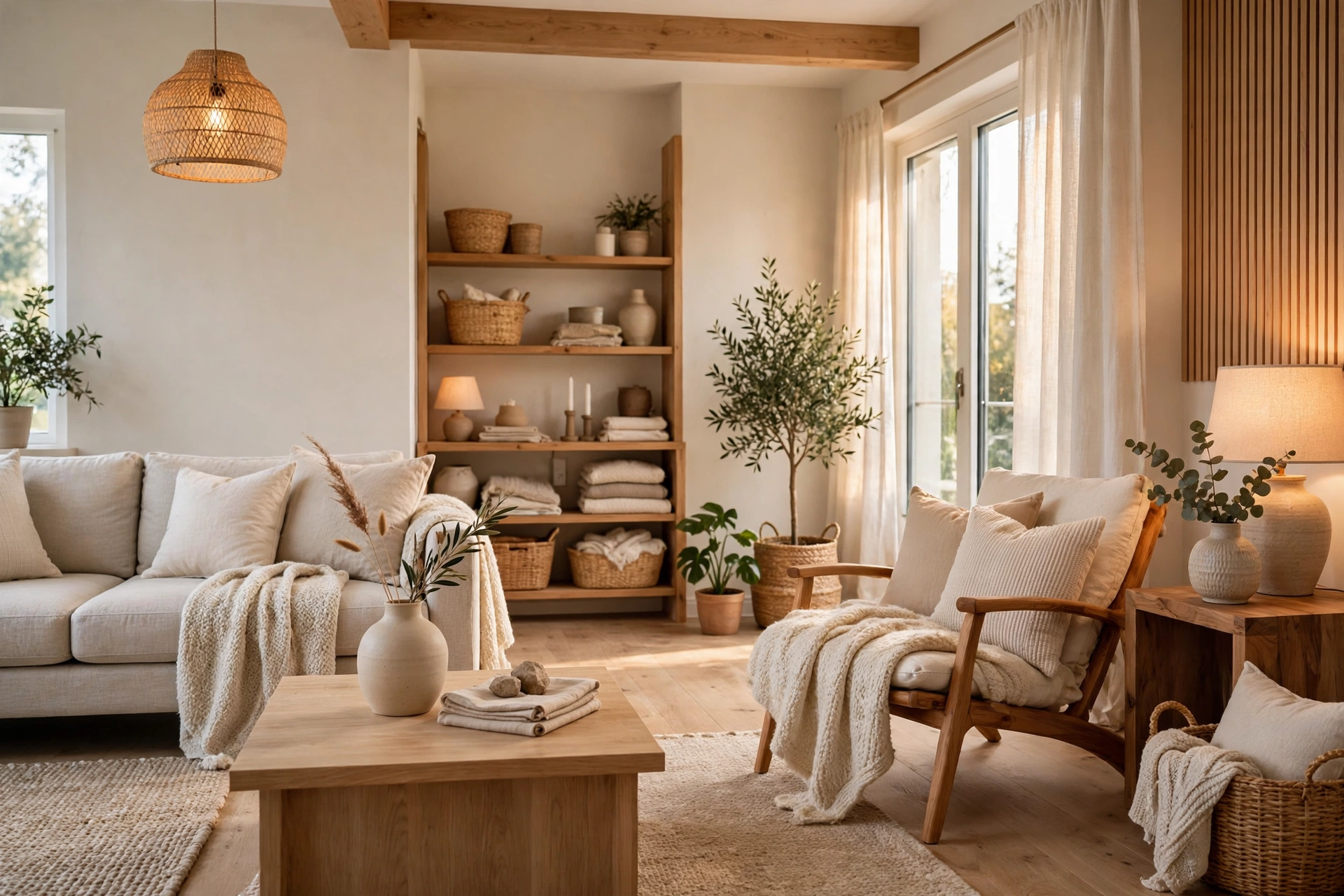
An interior design style is a repeated set of choices — about colour, material, furniture shape, and mood — that together give a room one recognisable character. There is no official count of styles. Design schools usually teach five to seven core families, most home guides list somewhere between ten and twenty, and once regional and revival labels are added the number passes fifty. This guide covers the twelve you will actually meet in real homes, what each one looks like in a finished room, and how to choose one that fits your rooms, your budget, and your life.
The fastest way to use this guide is the comparison table first, then the style a table row points you to. If two styles sound alike — modern and contemporary are the classic pair — the table and the short profiles show exactly where they split.
Interior design styles at a glance
Grouping helps more than a flat list. Most styles fall into four families: calm and pared-back, clean-lined and modern, relaxed and nature-led, and warm and layered. The table below is the whole guide in miniature; the sections after it explain each style in a paragraph or two.
| Style | Feel | Palette | Key materials | Best rooms |
|---|---|---|---|---|
| Scandinavian | Bright, calm | White, pale wood, soft grey | Light oak, wool, linen | Living, bedroom |
| Japandi | Still, grounded | Warm neutrals, earth tones | Natural wood, paper, clay | Living, bedroom |
| Minimalist | Clear, restful | Neutrals, black and white | Glass, steel, light wood | Small rooms |
| Modern | Structured | Neutrals, one accent | Steel, glass, leather | Open plans |
| Contemporary | Current | Neutrals, bold contrast | Mixed, often glossy | Any, updated often |
| Mid-century modern | Warm retro | Warm wood, bold accents | Teak, walnut, plywood | Living, dining |
| Coastal | Airy, light | White, blue, sand | Weathered wood, linen | Living, bedroom |
| Bohemian | Collected, free | Rich, mixed colour | Rattan, textiles, plants | Living, bedroom |
| Industrial | Raw, urban | Grey, black, brick | Metal, concrete, leather | Lofts, kitchens |
| Traditional | Classic, formal | Deep, rich tones | Mahogany, velvet, brass | Formal living |
| Farmhouse | Warm, rustic | White, wood, black | Reclaimed wood, metal | Kitchens, living |
| Art Deco | Glamorous, geometric | Jewel tones, gold | Brass, velvet, marble | Dining, bedrooms |
Calm and pared-back styles
Scandinavian is built on simplicity, practicality, and comfort: light-filled rooms, soft neutral tones, and natural materials like pale wood, wool, and linen. It grew out of Nordic functionalism and suits homes with limited daylight, because white walls and pale wood reflect what light there is. Furniture is simple and practical, textiles are soft, and ornament is almost absent.
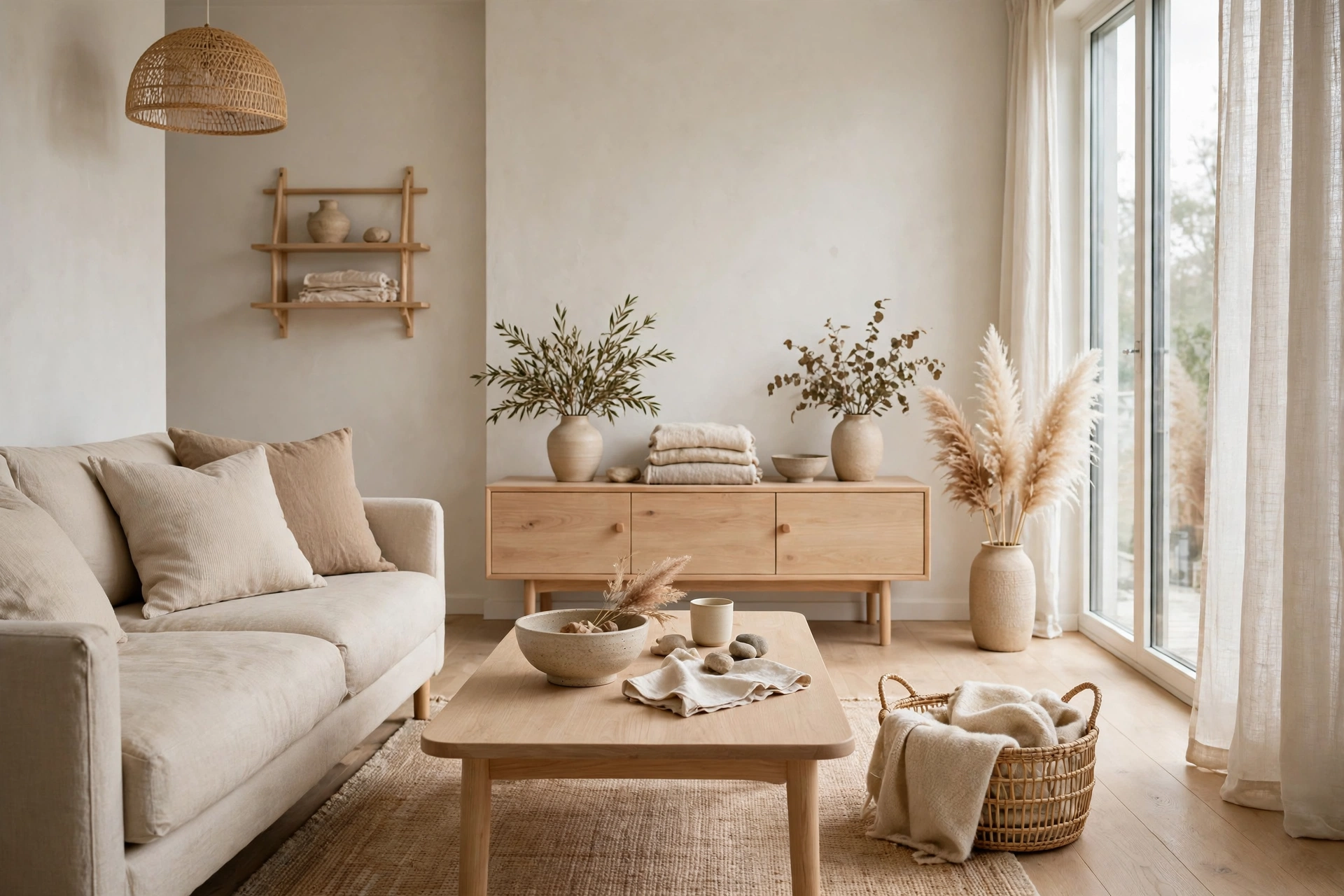
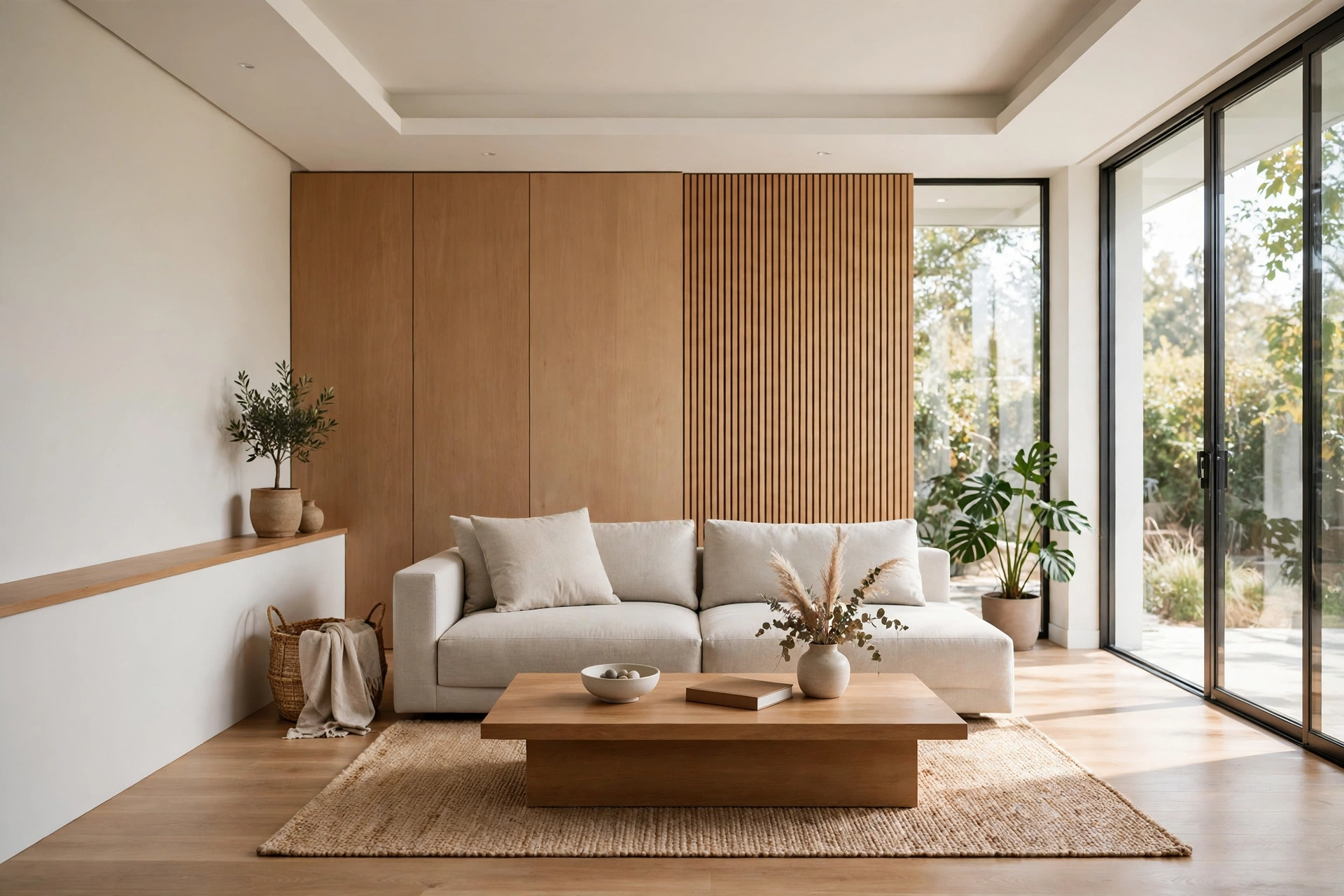
Japandi brings together the Japanese love of simplicity and nature with the Scandinavian focus on comfort. Natural materials, muted warm tones, clean lines, low furniture, and handmade pieces give it a serene feel that still looks lived in. Our japandi living room ideas cover the palette, the low furniture, and the materials in full.
Minimalist design descends from the modernist movement: sleek, clean lines and the elimination of decoration added purely for embellishment. Where Japandi adds warmth back in, minimalism keeps going — fewer objects, stricter surfaces, almost no ornament. It suits small rooms and people who dislike clutter, and it fails when it becomes merely empty rather than edited.
Clean-lined and modern styles
Modern design comes from early to mid-20th century modernism and has a very specific look: clean lines, practical layouts, furniture low on slim legs, flat unornamented surfaces, and a restrained palette of neutrals with one primary accent. Steel, glass, lacquer, and leather are its materials. Modern is a historical movement, which is why it stays recognisable decades later.
Contemporary simply means what is current — the style of right now, which at the moment favours curves, mixed metals, and neutrals with bold contrast. It changes as the decade changes, so a contemporary room needs updating more often than a modern one. The confusion between the two is constant: modern is a fixed historical look, contemporary is a moving target.
Mid-century modern, roughly 1945 to 1969, is warmer than either: low, tapered furniture in teak and walnut, molded plywood, and bold accent colours against warm wood. It suits ranch homes and anyone who loves vintage furniture, and it mixes well with modern pieces because the lines are related.
Relaxed and nature-led styles
Coastal design is light, relaxed, and breezy. It uses white, sand, and sea-blue tones with whitewashed wood, rattan, jute, linen, and cotton to make a room feel like a beach house without turning it into a theme. In practice it is about atmosphere more than theme — light, natural materials, and a relaxed way of living, with no anchors or seashells required. It suits sunny rooms and vacation-style bedrooms.
Bohemian is the collected opposite: rich mixed colour, layered textiles, rattan, plants, and objects gathered over time. Where the calm styles remove, bohemian adds — but on purpose, with a unifying thread of colour or material so it reads as collected rather than cluttered. It suits living rooms and bedrooms where the owner actually lives with their things.
Warm and layered styles
Traditional design is classic and formal: dark polished woods like mahogany, velvet, brass, molding, and pattern, in deep rich tones. It suits formal living rooms and homes with the architecture to carry it, and it overwhelms small or low-ceilinged rooms quickly.
Farmhouse is a warm, rustic style handled with clean modern lines: reclaimed or shiplap wood, white paint, black metal accents, and practical pieces. Modern farmhouse, the current version, keeps the materials and drops the clutter, which is why it works in kitchens and family living rooms.
Industrial takes its cue from factories and lofts: exposed brick, metal, concrete, and leather in greys and blacks. It suits lofts and kitchens with the height and light to carry raw materials, and it needs softening with textiles in smaller homes or it turns cold.
Art Deco is glamorous and geometric: jewel tones, gold and brass, velvet, marble, and strong symmetrical shapes from the 1920s and 1930s. A little goes a long way — a Deco mirror, a brass lamp, or one jewel-toned wall carries the style in a dining room or bedroom without rebuilding the room around it.
How to choose a style for your room
Start with the room, not the mood board. Small rooms do best with the calm and pared-back styles, because light colour, low furniture, and closed storage make the room read as one volume — the same principle behind our small bedroom design ideas and small kitchen design ideas, and our small bathroom design ideas, where layout and continuous colour do the heavy lifting.
Then check light, use, and budget. A dark north-facing room belongs in Scandinavian or coastal, not in traditional or industrial. A room used daily by children needs the practicality of modern or farmhouse, not velvet and brass. A rented room needs styles that live in furniture and textiles — Japandi, Scandinavian, coastal, bohemian — rather than in built work. And if the style needs professional help to land, the honest first step is knowing what that help costs: our guide to how much an interior designer costs breaks the pricing down before you commit.
Finally, mix with a rule. Two styles can share a room when they share a palette or a material — Scandinavian and Japandi mix almost invisibly, modern and mid-century share lines. Three styles in one room, or two styles with clashing palettes, is where rooms fall apart. Pick a dominant style, borrow one element from a second, and stop.
Frequently asked questions
What are the main interior design styles?
The most common are Scandinavian, minimalist, Japandi, modern, contemporary, mid-century modern, coastal, bohemian, industrial, traditional, farmhouse, and Art Deco. Many guides add wabi-sabi, organic modern, Mediterranean, transitional, and maximalist. There is no official list — the names describe recurring combinations of colour, material, furniture shape, and mood.
What is the difference between modern and contemporary?
Modern is a historical movement from early to mid-20th century modernism, with a fixed look: clean lines, low furniture, steel and glass, restrained neutrals. Contemporary means current — whatever is in style now, which changes. A modern room looks the same in ten years; a contemporary room will need updating.
What is the difference between Scandinavian and Japandi?
Scandinavian is brighter and cosier, with white walls, pale wood, and standard furniture heights. Japandi is warmer and lower, with warm neutrals, a dark accent, furniture closer to the floor, and Japanese restraint about empty space. Japandi is Scandinavian comfort with Japanese discipline added.
Which interior design style is best for a small room?
Minimalist, Scandinavian, and Japandi work best because they use light colour, low furniture, and closed storage to make the room feel like one volume. Coastal also works well in small sunny rooms. Dark, heavy styles such as traditional and industrial tend to shrink a small room further.
Can I mix two interior design styles in one room?
Yes, when the two share a palette or a material. Scandinavian with Japandi, or modern with mid-century modern, mix easily. The rule is one dominant style plus one borrowed element from a second. Mixing three styles, or two with clashing colours, is where rooms start to look accidental.
How do I know which style suits my home?
Check the room first: its size, ceiling height, and daylight decide more than taste does. Then check how the room is used and who uses it, and what your budget allows. Styles that live in furniture and textiles suit rentals and tight budgets; styles that need built work suit owned homes. If you are still unsure, a designer can help — see what that typically costs before you book one.