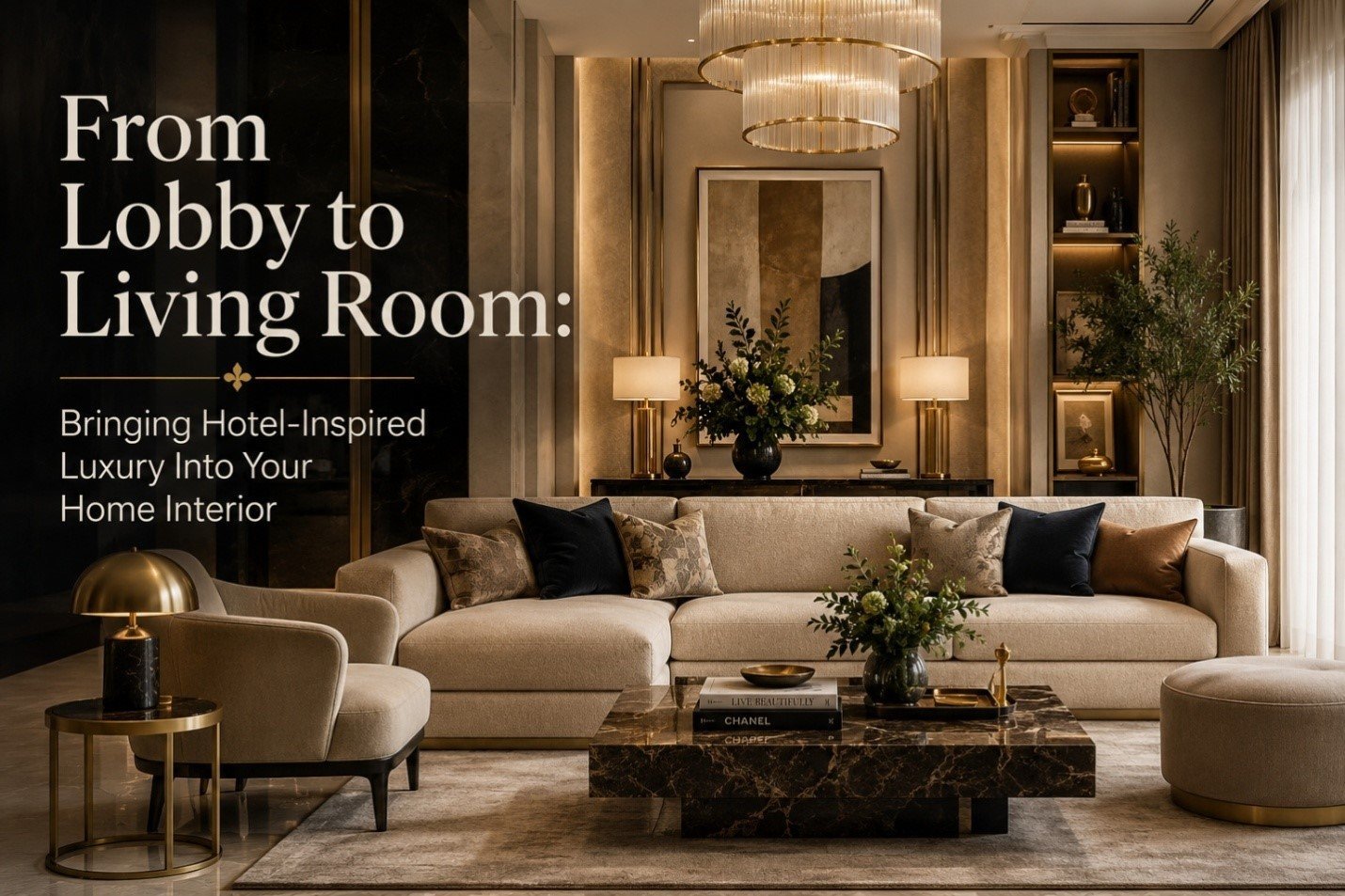
There is a particular feeling that washes over you the moment you step into a great hotel lobby. The lighting is warm but purposeful. Every surface seems considered. The furniture invites you to sit without asking permission. You feel calm, elevated, and somehow more at ease than you expected. Then you go home, and that feeling disappears.
It does not have to.
The design principles behind world-class hotel interiors are not exclusive to commercial spaces or seven-figure renovation budgets. Many of them are surprisingly transferable to residential settings, and understanding how they work can permanently change the way you think about your own home. Whether you are refreshing a single room or planning a full redesign, drawing inspiration from the hospitality world is one of the most effective strategies available to homeowners today.
Studios specializing in luxury hotel interior design have spent decades perfecting the art of creating spaces that feel both impressive and deeply comfortable at the same time. The best residential designers borrow from that same playbook.
Start with the Lobby Mindset: First Impressions Define Everything
Hotels obsess over their lobbies because they understand that the first impression sets the emotional tone for everything that follows. Your home’s entryway deserves the same attention.
A well-designed entry does not need to be large. It needs to communicate something intentional. That might mean a console table with a single statement object, thoughtful lighting at eye level, or a rug that anchors the space and signals a transition from outside to inside. The goal is to make anyone who enters, including yourself, feel that they have arrived somewhere worth being.
This thinking connects closely to a broader principle explored in Why Great Homes Are Designed Around Transitions, Not Rooms on this blog. Hotels understand that the journey between spaces matters just as much as the destinations themselves.
Layer Your Lighting Like a Professional
Walk through any well-designed hotel at dusk and you will notice something immediately: the lighting is never flat. There is no single overhead source flooding the room with uniform brightness. Instead, multiple light sources operate at different heights and intensities, creating depth, warmth, and a sense of intimacy even in large spaces.
This is one of the most impactful and underused techniques in residential design. Most homes rely far too heavily on ceiling fixtures and natural light alone. Adding floor lamps in corners, table lamps at seated eye level, and subtle accent lighting behind shelving or beneath furniture dramatically changes how a room feels without changing a single piece of furniture.
The shift from cool white bulbs to warm-toned ones is also worth noting. Hotels almost universally choose warmth, and the effect on comfort and perceived quality is significant.
Invest in Texture Before You Invest in Color
Interior designers working in high-end hospitality know that color gets the attention while texture does the work. A room with a limited color palette but rich material variety, think linen upholstery, a velvet cushion, a worn leather chair, a wool throw, a marble side table, will always feel more sophisticated than a room with bold color choices and uniform surfaces.
This is a principle that translates directly to any home. Before reaching for paint swatches, spend time thinking about the physical materials in your space. Are your soft furnishings all the same weight and weave? Is there contrast between hard and soft surfaces? Does anything in the room invite you to touch it?
Balancing Modern Style with Timeless Design is something the best hotels do exceptionally well, and as that article discusses, the key often lies in choosing materials that age gracefully rather than chasing what is trending.
Treat Scent as a Design Element
This is where many homeowners leave an entire dimension of the experience on the table. Leading hotel brands invest heavily in signature scents for their properties because they understand that smell is the sense most directly tied to emotion and memory. The scent of a space is part of its identity.
In a residential setting, this does not require a diffuser system wired into your ventilation. A thoughtfully chosen reed diffuser in the right location can anchor the atmosphere of a room in a way that no paint color ever could. The article Discover the Best Room Diffuser Refill for Your Home offers practical guidance on choosing the right scent profile for different rooms, which is worth reading before committing to a fragrance direction for your space.
Edit Ruthlessly: Luxury Is Often the Absence of Clutter
Spend time in a truly well-designed hotel room and you will be struck by what is not there. There are no piles of unsorted items on surfaces. No tangled cables. No decorative objects that do not earn their place. Everything visible has been chosen and positioned deliberately.
This is perhaps the most achievable of all hotel design principles because it costs nothing. It simply requires a willingness to remove what is not necessary. Luxury in interior design is often less about adding beautiful things and more about subtracting everything that dilutes the impact of what remains.
A useful starting point is to treat each surface in your home as a hotel designer would treat a room: ask what the one or two objects are that genuinely elevate this space, and let everything else go.
Think Beyond the Bedroom: The Whole Home as an Experience
Hotels do not design rooms in isolation. Every space, from the corridor to the restaurant to the spa, contributes to a single cohesive narrative. Your home can work the same way when each room speaks the same design language, using shared materials, a consistent tonal range, and recurring details that tie everything together.
If you are working toward a more cohesive approach but are not sure where to start, a professional consultation can help you develop a clear direction before committing to any major changes.
The gap between how a luxury hotel feels and how your home feels is not as wide as it might seem. It is mostly a matter of intention: deciding to treat your own space with the same care and deliberateness that the best designers bring to the spaces we admire most when we travel.
Your home deserves that same level of thought. And unlike a hotel, you get to stay.