A small bathroom does not run out of storage because it is small. It runs out because everything is stored on the two surfaces that are already full — the vanity top and the floor. A typical small bathroom is about 5 by 8 feet, about 40 square feet, and about half of that is the tub. The storage that works in a room that size does not sit on the floor at all. It goes into the vanity, onto the walls, into the stud bays, and above the toilet, where the space is already there and doing nothing.
This guide works through those places in the order that pays off most. First the measurements and the clearances, then the vanity, then the recessed cabinet, then the wall over the toilet, then the shower, then the tall and narrow pieces, then the door and the gaps, and finally the habits that keep it all tidy. Each step is small on its own; together they are the difference between a bathroom where everything has a place and one where bottles live on the tub rim and towels live on the floor.
Measure First, Then Buy Anything
Start with a tape measure, not a shopping list. Measure the room at its narrowest point, the door swing, and the clear space in front of the toilet and the vanity. Keep about 21 inches of clear space in front of the toilet or vanity as a minimum, and about 30 inches where you can get it — that is the room to stand, bend and dry off without backing into the door. If a new cabinet would eat that clearance, it is the wrong cabinet, however good it looked in the shop.
Depth is the number that matters most in a small bathroom, more than width. A standard vanity is about 21 to 24 inches deep. In a 5-foot-wide bathroom, a 21-inch-deep vanity leaves about 39 inches to the tub; an 18-inch-deep one leaves about 42 inches and holds nearly as much; a 12-inch-deep one with a trough-style sink leaves about 48 inches and makes the room feel usable, at the cost of counter space. For a powder room, 12 to 16 inches is the usual depth, and stock sizes exist in that range now.
The same depth rule sorts every other piece. Wall shelves about 4 to 8 inches deep hold bottles without crowding the room. A cabinet over the toilet about 8 inches deep holds spare rolls and towels without projecting past the front of the tank, which is about 6 to 9 inches deep. Anything that sticks out further than the thing it sits above starts to feel like an obstacle, and in a 5-foot room an obstacle is what you bump into every morning. The same measure-first thinking shapes the small apartment design ideas guide — zones first, furniture second — and in a bathroom the zone is the walkway and the door swing, so they get measured before anything else.
A Vanity With Drawers, Not Doors
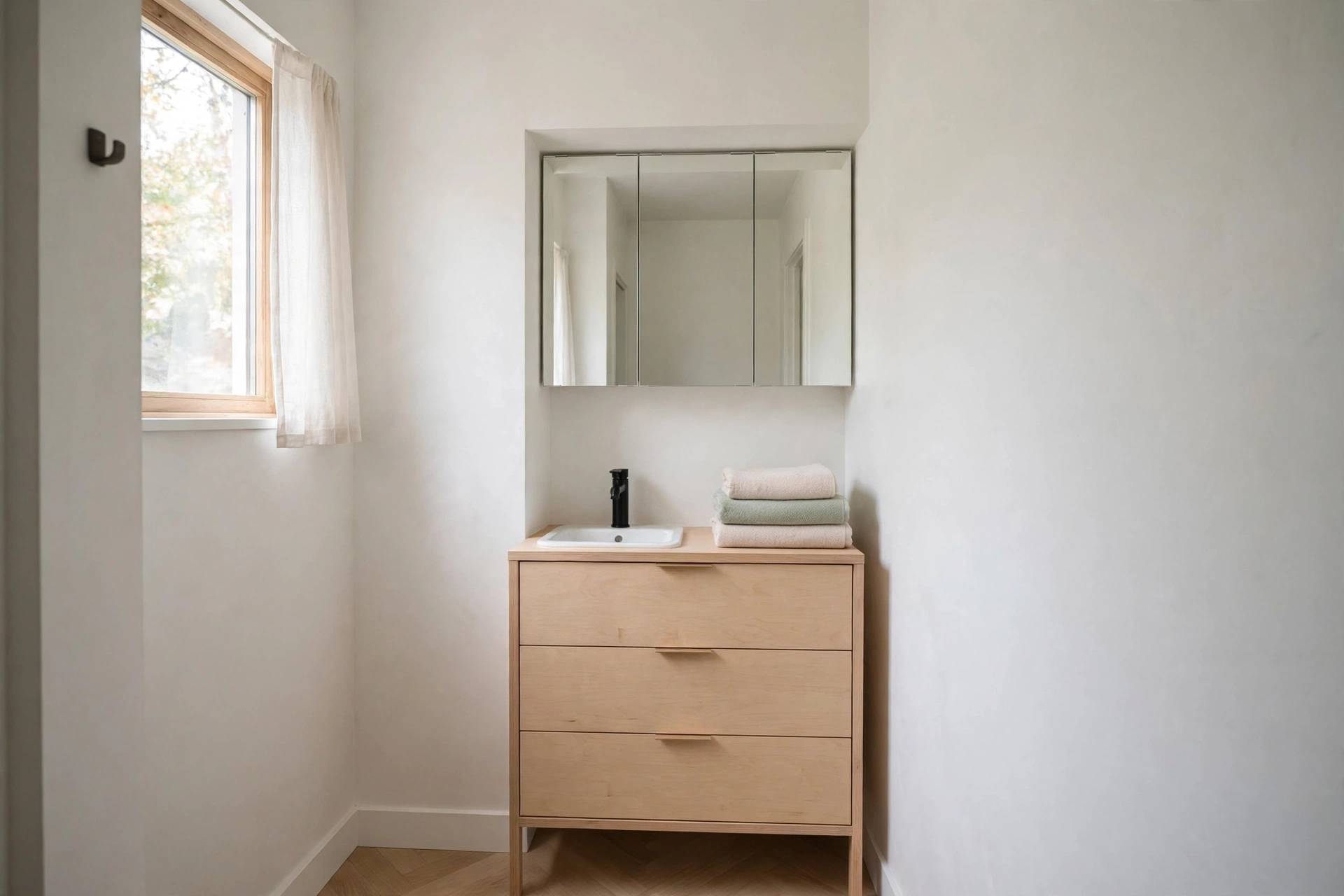
The vanity is the storage, and most of them waste half of it. A door with one shelf and the trap in the middle holds a basket of cleaning things and some lost hair ties. The same width with two or three drawers, the top one notched around the trap, holds everything two people use daily and is faster to find things in. A 30-inch vanity with two deep drawers can be more useful than a 36-inch one with cabinet doors and one shelf, because drawers are searched from above and doors are searched by reaching into the dark.
Judge a vanity by its drawers, not its width. Look for a deep bottom drawer for towels and cleaning products, a middle drawer for daily toiletries and hair tools, and a shallow top drawer for cotton wool, nail care and the small things that otherwise scatter across the counter. Drawer dividers keep those small things in their lanes; without them, a drawer becomes a countertop lying flat. And check that the top drawer is actually notched around the plumbing — a full-width drawer that cannot close is worse than no drawer at all.
If the room has a pedestal sink instead of a vanity, the storage has to come from elsewhere, because a pedestal gives you nothing below the basin. A skirt around the pedestal, or a small freestanding shelf tucked beside it, reclaims some of that space and hides the supplies. But where a vanity fits, even a slim 12 to 18 inch deep one, it is the strongest single storage move in the room, because it holds the sink, the countertop, the drawers and the cleaning supplies in one piece that was already taking up floor space.
The Recessed Medicine Cabinet
A flat mirror wastes a cabinet’s worth of space. A recessed medicine cabinet gives you the mirror and the storage in the same footprint, and it is the highest-value addition in any bathroom where a flat mirror currently hangs. The trick is the stud wall itself: the cavity inside a standard wall is about 3-1/2 inches deep, which is exactly the depth of a shampoo bottle, a pill bottle, a razor and most of what lives on a vanity top.
A recessed cabinet about 14 inches wide fits between studs at 16-inch centres, stands 24 to 36 inches tall, and sits flush with the wall behind a mirror door. It holds a surprising amount — toothpaste, medication, contact lenses, razors and skincare — all within reach and none of it on the counter. A wider one, 30 or 36 inches, needs a stud cut and a header, which is a carpenter’s job. The surface-mount version holds the same and sticks out about 5 inches, which in a 5-foot room is a forehead problem, so recessed is worth the extra work where the wall allows it.
Before cutting anything, check the bay. It must have no wiring, no vent and no plumbing in it, and it must not be an exterior wall, where insulation and a vapour barrier say no. A stud finder and a quick look inside the wall settle that in minutes, and skipping the check is how a simple cabinet becomes a repair. Inside the cabinet, adjustable glass shelves let you set the spacing around the bottles you actually own — tall bottles on one shelf, small jars on another — and the glass keeps the light moving so nothing hides in the back.
The Wall Over the Toilet
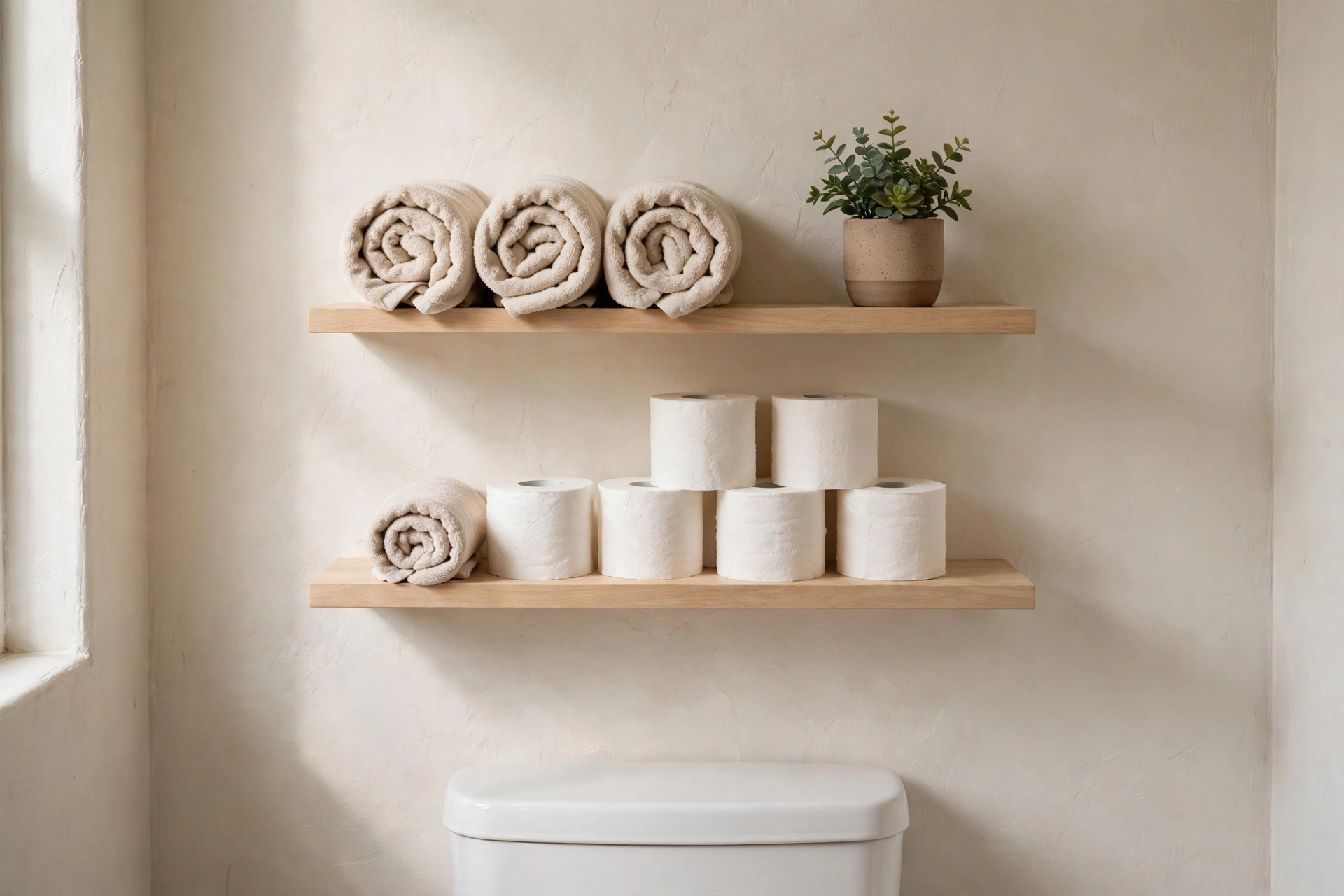
The wall above the toilet is the most reliably wasted real estate in any bathroom. In a room with an 8-foot ceiling it offers about 54 to 68 inches of clear vertical space, depending on the tank height, and most homes leave all of it empty. A wall-hung cabinet about 24 inches wide and 8 inches deep, with doors, holds spare rolls, towels and the things the medicine cabinet does not. Two open shelves at the same depth hold folded washcloths, baskets and extra toilet paper, and they make the room look like a bathroom rather than a storeroom.
Keep the depth honest. Shelves above the toilet should not project further forward than the front of the tank, or the unit interferes with the flush handle and becomes a visual obstacle. Most good over-toilet units are designed at 8 to 10 inches of shelf depth for exactly this reason, and at 22 to 24 inches wide — matching the width of a standard tank — a three-shelf unit adds roughly 637 square inches of shelf surface from a footprint the toilet already occupies. The lowest shelf, roughly 34 to 38 inches from the floor, is the most accessible, so it holds the daily things; the top shelf, typically 60 to 68 inches up, suits backup stock.
A floor-standing over-toilet frame from the big-box store holds the same things, but it wobbles, and it makes the room look like a dorm. A wall-hung cabinet or two open shelves looks like a bathroom. If there is a window on that wall, put two floating shelves either side of it instead of across it, and keep the light. And leave the lid alone: the lowest shelf should sit high enough — about 24 to 28 inches above the tank — that the lid lifts freely and nobody bumps their head reaching for a towel.
A Shower Niche Instead of a Caddy
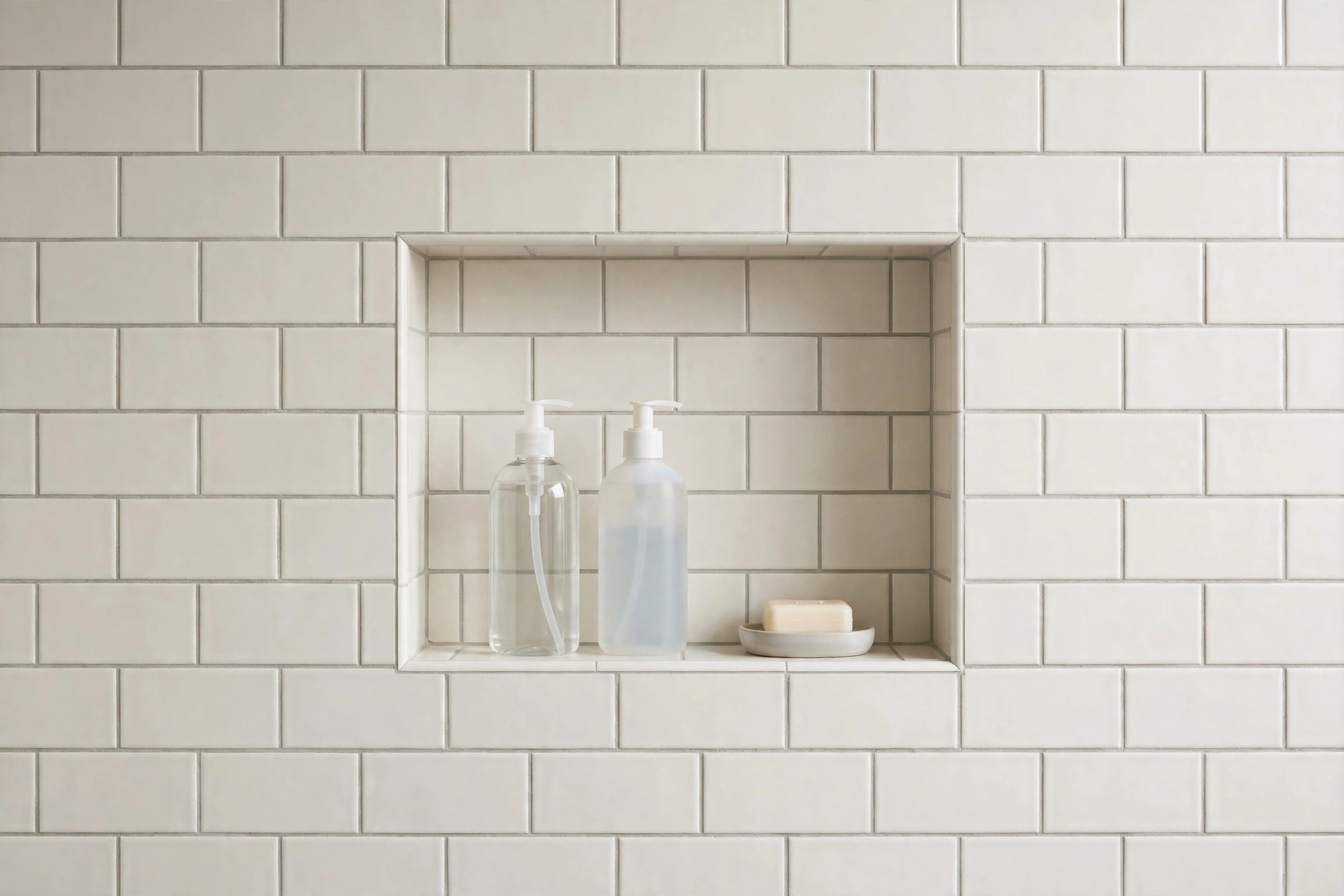
The shampoo that lives on the tub rim is the clutter you see every time you step into the shower. A tiled niche in the shower wall is the same stud-bay trick as the medicine cabinet, in the wet zone. A niche about 12 to 14 inches wide and 20 to 30 inches tall, with one or two shelves, holds the shampoo and conditioner where they are used, and the bottles disappear into the wall instead of lining the rim.
Size the niche around the bottles you actually use. Many shampoo bottles are 8 to 10 inches tall, while larger pump bottles can be 11 to 13 inches tall, so a niche that fits the tallest bottle in the house is the one that gets used. Three items is the usual limit for a niche that still looks calm; more than that and it becomes a shelf that happens to be tiled. A ceramic or stainless corner shelf is the retrofit option when a recessed niche is not possible, and it uses the dead triangle in the shower corner that flat shelves miss.
A niche is easiest during a renovation, when the wall is open anyway, but it is also the moment to think about it before any other storage is bought. The same closed-storage thinking runs through the small laundry room ideas guide — hide the real life, show the calm surfaces — and nowhere does it matter more than in the shower, where every bottle is on display at eye level. One niche, used for the daily bottles only, keeps the rest of the shower empty.
A Tall, Narrow Tower for Towels
Wide and low loses in a small bathroom; tall and narrow wins. A 12-inch-wide cabinet that runs to near the ceiling holds an astonishing amount in almost no footprint, and it is the piece to reach for when the vanity and the medicine cabinet are already full. Where the vanity wall is 48 inches or longer and the vanity is 30 or 36 inches, a tower 12 to 18 inches wide and about 84 inches tall, closed below and open or glass above, holds the towels, the hair dryer and the spare everything.
Put the closed part at the bottom and the open part at the top. Closed doors hide the spare toilet paper and the cleaning products; open shelves hold the rolled towels and the things you reach for with wet hands. A smaller version sits on the counter at one end, about 12 inches wide, and does the same job in miniature where the floor will not take a tower. Either way, the tower earns its place by using height, which is the one dimension a small bathroom has in plenty.
Keep the tower honest about what goes in it. Towels, spares and the hair dryer belong there; the winter coats and the spare umbrellas do not. When every shelf holds something the bathroom actually uses, the tower looks intentional. When it is full of things that belong in another room, it is just a cupboard that happens to be tall. The small living room design ideas guide makes the same point about zones — rugs, furniture and light mark the zones, not walls — and in a bathroom the tower marks the towel zone, so it should hold towels first.
The Door Back and the Gaps
Every small bathroom has pockets of space doing nothing. The back of the door is the best of them: an over-the-door rack or hooks holds towels, robes and a hanging organizer for products, and it costs no drilling and no floor space. That makes it the most renter-friendly storage gain in the room, and the first thing to add in a flat where the walls cannot be cut. A full column of organizer pockets on the door back holds the products that would otherwise live on the vanity top.
The gap beside the vanity or the toilet is the next pocket. A slim rolling cart slides into that narrow gap and holds cleaning sprays, spare rolls and bottles in a space most people ignore — but measure the gap first, because cart widths vary and a cart that does not fit the gap is a cart that lives in the hallway. The gap above the door takes a single high shelf for backstock — extra toilet paper and towels, out of sight and out of the way — and the corners take a corner caddy or a corner shelf in the shower.
None of these need tools or a landlord’s permission, which is why they are ideal for renters and for anyone who wants storage this weekend rather than after a renovation. Hooks where your hand reaches, a rack on the door, a cart in the gap: three moves, no holes, and the counter is clear by Sunday. The same three layers — ambient, task and accent — that the living room lighting ideas guide builds in a living room apply here in miniature too: a ceiling wash, a light aimed at the mirror, and a warm glow at the vanity, so the new shelves are actually easy to see and use.
Under the Sink, Organised Around the Pipes
Under-sink organizers double the usable storage in the cabinet by working around the plumbing rather than ignoring the space it leaves behind. The trap sits in the middle and takes the centre; the usable space is on both sides of it. Stackable shelf risers lift bottles into two levels, a tension rod across the cabinet holds spray bottles by their triggers, and drawer dividers keep the small things from sliding into the pipes.
Sort what goes under the sink by how often it is used. Daily things live at the front and at the top: the hand soap refill, the cleaning spray, the spare toothpaste. Weekly things live behind them. Backstock — the extra rolls and the spare bottles — lives at the back or in the tower, not under the sink, because backstock under the sink is backstock you forget you own. One basket per person, or one basket per job, beats one big basket that everything disappears into.
Keep the cleaning products in one place and the toiletries in another, and keep both off the counter. A counter with nothing on it except a soap dispenser and a toothbrush holder looks twice as big as a counter with ten bottles on it, and it takes ten seconds to wipe instead of ten minutes to move everything. That is the whole point of under-sink storage: the counter is for using, not for storing.
Towels, Hooks and the Colour That Calms It
Towels are the last thing to sort, because they are the thing that makes a small bathroom look messy fastest. A towel bar sits about 48 inches from the floor, and robe hooks about 60 to 70 inches — high enough that long towels do not touch the floor. One hook per person, and one towel per hook, is the rule that holds; a second towel on the same hook is a towel that never dries. Rolled towels on an open shelf dry faster and look tidier than folded stacks, and a basket under the vanity holds the spares.
Colour and light decide whether a tiny bathroom feels inviting or like a wet cupboard, and both are cheap to fix. Warm, light neutrals — a warm white, a soft cream, a pale greige — suit a small bathroom better than cool bright white, which can feel harsh under a single ceiling light. Painting the walls and the ceiling in the same colour blurs the edges and makes the room read bigger, because the eye finds no line to stop at. The neutral living room ideas guide builds the same idea in layers — one undertone family, three textures, one dark anchor — and a small bathroom follows it wall for wall: one dark note, a black hook rail or charcoal hardware, stops a pale room washing out.
Light the shelves you just built, or they will not get used. A ceiling wash, a light aimed at the mirror and the hooks, and a warm glow at the vanity — three small lights, each doing one job — make a dark bathroom feel intentional in a way one bright ceiling light never does. And keep the room dry: a bathroom that stays dry stays tidy, because damp towels and wet bottles are what turn a tidy shelf into a pile within a week.
Renters, Budgets and Keeping It Tidy
Almost everything in this guide works in a rental, because almost none of it needs permission. Hooks on adhesive strips, an over-the-door rack, a rolling cart, a basket and a tray — none of these change the flat. The pieces that need a wall cut, such as a recessed cabinet or a shower niche, are the ones to save for a renovation or a home you own, and a surface-mount cabinet is the no-cut version that holds the same things and sticks out about 5 inches.
On a budget, spend in this order: hooks first, then a mirror cabinet, then a tray and a basket, then the over-toilet shelves, then the vanity. Hooks and a mirror change how the bathroom works and feels for very little money; the vanity is the most expensive piece and the last one to buy, because by then you know exactly how deep it can be. A second-hand tower, repainted in the bathroom’s colour, is often a better buy than a cheap new one that wobbles.
Keeping it tidy is a weekly habit, not a renovation. Once a week, clear every surface completely, then put back only one thing per surface and return the rest to its home. Bottles that have not been used in a month go back to the cupboard or out of the house; towels over the one-per-person limit go back too. A small bathroom rewards order, not spending — and a bathroom that stays tidy for a week will stay tidy for a month, because everything in it finally has a place.
Frequently Asked Questions
How deep should a vanity be in a small bathroom?
About 18 inches deep is the usual sweet spot in a 5-foot-wide bathroom — it leaves about 42 inches to the tub and holds nearly as much as a 21-inch one. In a powder room, 12 to 16 inches is the usual depth. A standard 21 to 24 inch vanity is the piece to avoid where the walkway is already tight.
Can I fit a medicine cabinet between the studs?
Yes, if the bay is clear. A recessed cabinet about 14 inches wide fits between studs at 16-inch centres, and the 3-1/2 inch cavity fits most bottles. Check first that the bay has no wiring, vent or plumbing, and that it is not an exterior wall.
How high should shelves go above the toilet?
High enough that the lid lifts freely and nobody bumps their head — about 24 to 28 inches above the tank for the lowest shelf. Keep the shelf depth at about 8 inches, so it does not project past the front of the tank, and put daily things on the lowest shelf and backup stock on the top one.
What size should a shower niche be?
About 12 to 14 inches wide and 20 to 30 inches tall, with one or two shelves. Size it around the tallest bottle you actually use — many shampoo bottles are 8 to 10 inches tall, and larger pump bottles can be 11 to 13 inches — and keep it to about three items so it still looks calm.
How do I store towels in a tiny bathroom?
One hook per person at about 60 to 70 inches high, with one towel per hook, and rolled towels on an open shelf or in a basket for the spares. A tall narrow tower, 12 to 18 inches wide, holds the rest without taking floor space.
What storage works in a rented bathroom?
An over-the-door rack, adhesive hooks, a rolling cart in the gap beside the vanity, baskets and a tray — none of these need drilling or a wall cut. Save recessed cabinets and shower niches for a renovation or a home you own.