A rug that is the wrong size can undo a room that is otherwise well furnished. Too small, and the sofa and chairs look as though they are standing on a mat that drifted into the middle of the floor. Too large, and the room loses the border of floor that gives it shape, and the rug starts to look like wall-to-wall carpet that stopped short of the walls. The right size does something quieter: it pulls the seating together into one group, leaves the room breathing around the edges, and makes the furniture look as though it belongs exactly where it is.
Choosing the size is mostly measuring, not taste. The rug follows the furniture, the furniture does not follow the rug, and a tape measure used for ten minutes saves a return that costs far more. This guide works in the order that matters: measure the seating area, apply the front-legs rule, match the size to the standard sizes shops actually sell, and only then think about pattern and colour. Get the size right first and almost any rug you like will look right on top of it.
Measure the seating area first, not the rug
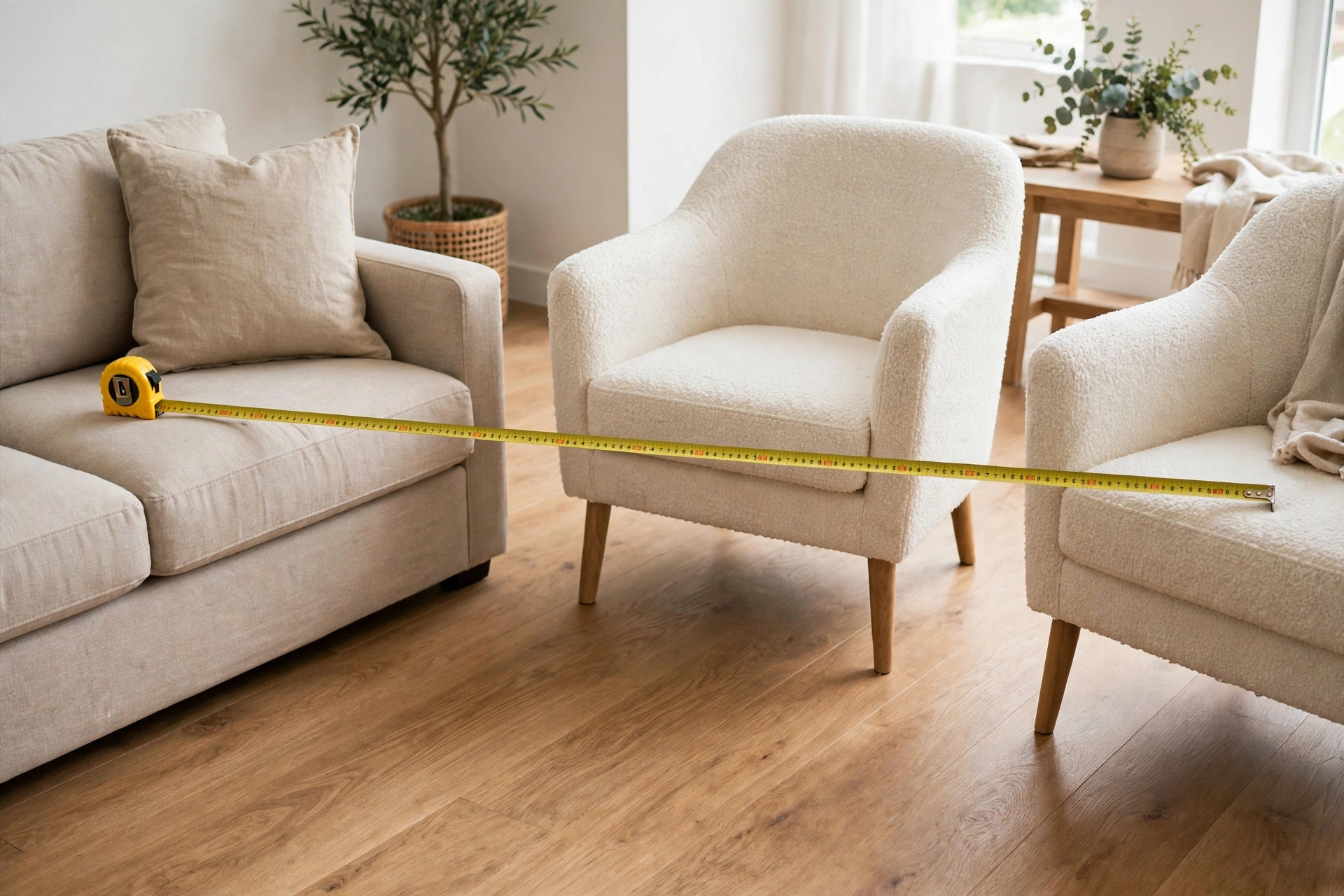
Start with the furniture, not the shop. Push the sofa and chairs into the arrangement you actually live with, then measure the whole group — from the outer edge of one arm to the outer edge of the far chair, and from the back of the sofa to the front edge of the chairs facing it. That rectangle is the seating area, and the rug has to cover it, not just the empty floor in the middle. A rug measured against the empty middle will always come out too small, because the furniture is half the room.
Write the two measurements down in inches or centimetres, whichever you think in, and keep them with you when you shop. Most living rooms fall into a small set of sizes, and knowing your seating area narrows the choice to one or two standard rugs before you ever look at a pattern. If your seating area is an awkward shape — an L-shaped sofa, or a chair pulled out at an angle — measure the widest points, because the rug has to cover the widest arrangement, not the tidiest one.
Measure twice, once with the furniture where it is and once with it where you would like it to be, if you are planning to move things. A rug bought for the current arrangement can end up the wrong size after a small change, and rugs are heavy, awkward things to return. The same measuring habit runs through our small living room design ideas, where every decision starts with what the room actually measures, not what it feels like it should hold.
Use the front-legs rule for the sofa
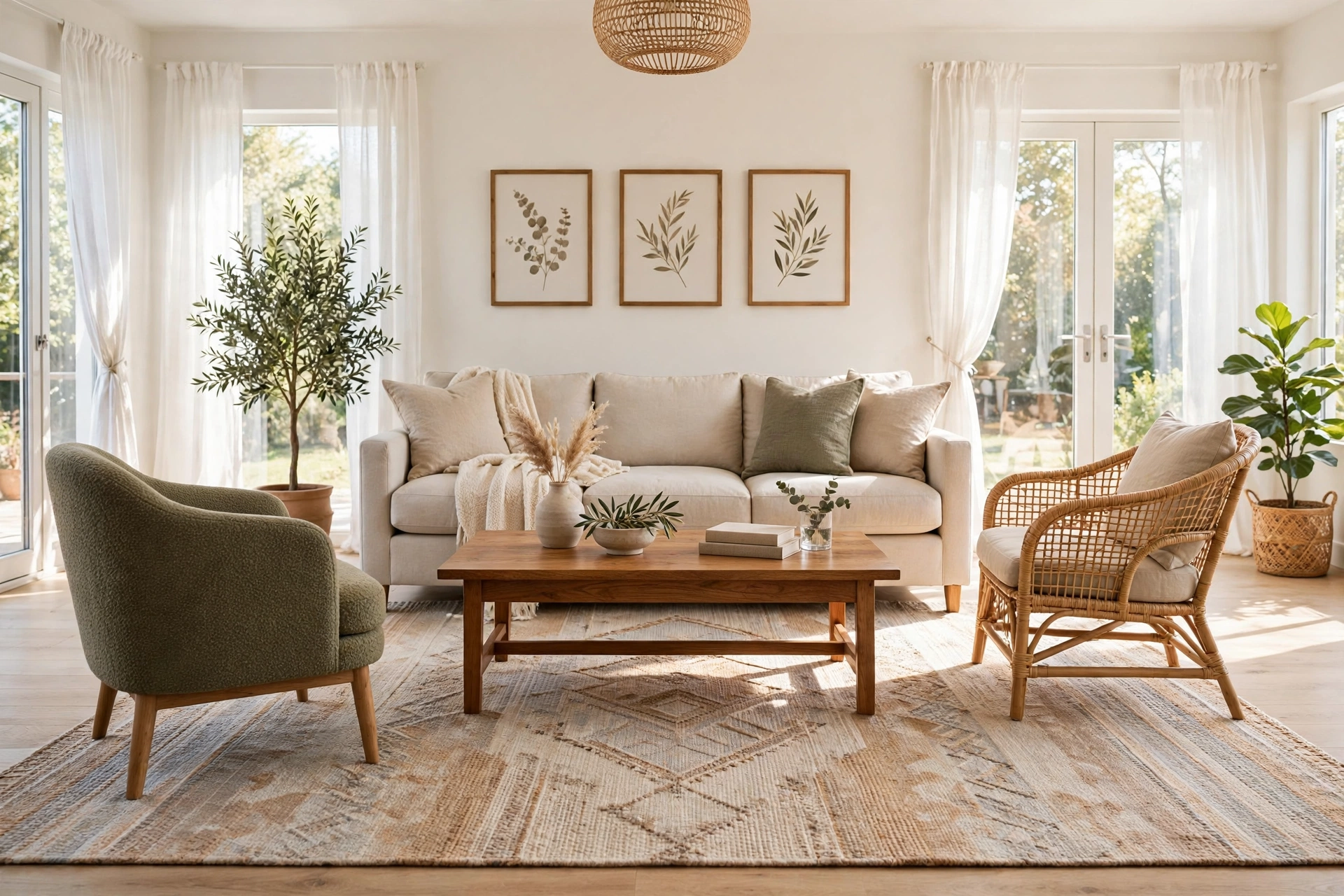
The front-legs rule is the simplest test in the whole guide, and it settles most living rooms on its own. The rug should be large enough that the front legs of the sofa sit on it, with the back legs off it on the floor behind. The same goes for the chairs facing the sofa: their front legs on the rug, their back legs off it. When every seat has its front legs on the rug, the whole group reads as one place to sit, and the rug looks anchored rather than floating.
If the rug is so small that the sofa’s front legs miss it entirely, the seating group splits in two — furniture on the floor, rug in the middle — and no pattern or colour will fix that split. If the rug is so large that all four legs of every seat sit on it, the room can still work, and in a large room it often looks better, but it is the more expensive way to get there and it leaves less floor showing. The front-legs position is the middle ground: it connects the furniture without swallowing the floor.
Check the rule from the doorway, not from above the rug. Stand where a visitor stands when they first walk in, and look at whether the sofa and chairs look connected to the rug or stranded beside it. The eye reads the connection from the front legs, so if those are on the rug the group holds together even before you notice the rug itself.
Standard rug sizes and which room each suits
Rugs are sold in a small set of standard sizes, and knowing them turns the choice into a short list. A 5 by 8 foot rug suits a small seating area — a loveseat and one chair, or a small sofa with no chairs. A 6 by 9 foot rug is the step up for a compact three-seat sofa with one chair. An 8 by 10 foot rug is the workhorse of most living rooms: it fits a standard three-seat sofa with two chairs and a coffee table, with the front legs on the rug and a border of floor showing around it.
A 9 by 12 foot rug suits a large living room, a long sofa with two chairs, or a room where the seating area is generous and the floor is mostly bare. A 10 by 14 foot rug belongs in a very large room or an open-plan space, where anything smaller would look like a mat in the middle of a hall. If your seating area falls between two standard sizes, go up rather than down — a rug that is slightly too large looks deliberate, while a rug that is slightly too small looks like a mistake, and the price difference between the two sizes is smaller than the cost of living with the wrong one.
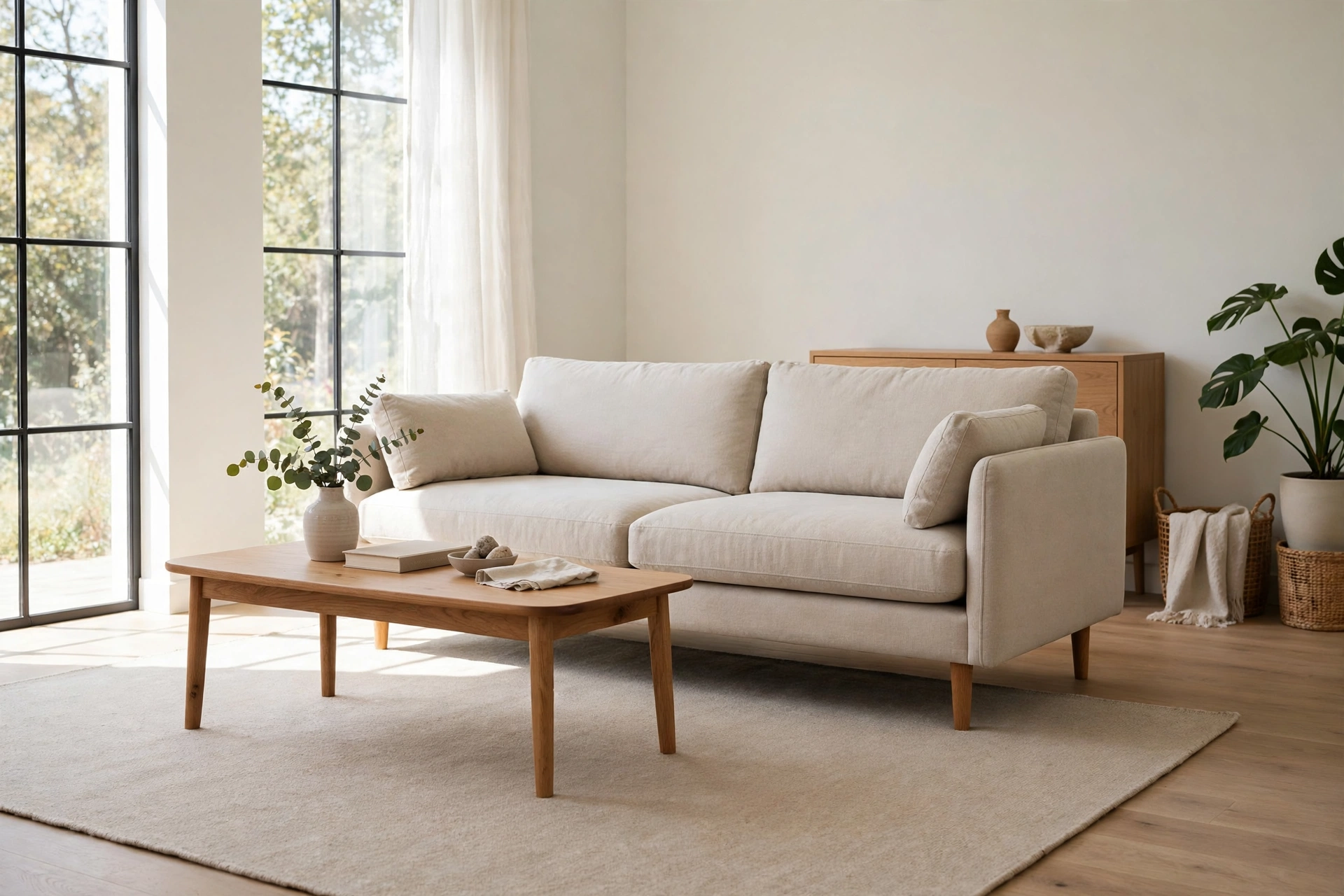
Before you buy, check the size on the label against your measurements, not against the size name on the display. Rugs are sometimes labelled with rounded sizes, and a rug sold as 8 by 10 can measure a few inches less. The pale, airy rooms in our Scandinavian living room ideas show the same sizes doing the work quietly — a large plain rug under a pale sofa, with the front legs on it and the pale floor showing all around.
Leave the right border of floor showing
A rug needs a border of bare floor around it, the way a picture needs a frame of wall around it. In most living rooms that border is about 12 to 18 inches on each side — enough floor to see, not so much that the rug looks lost. In a small room the border can be narrower, around 8 to 12 inches, because there is less floor to spare, but it should never disappear entirely. A rug that runs wall to wall on two sides stops looking like a rug and starts looking like carpet that was cut short.
The border also does practical work. It shows the floor you have, it gives you a place to walk that is not rug, and it stops the rug from pressing against skirting boards and furniture where it will wear unevenly. In a room with a beautiful wood floor, the border is what lets the floor be part of the room rather than a surface hidden under the rug. Measure the border when you measure the rug: the rug size minus the border on both sides is the floor the room keeps.
If the room is narrow, the border matters even more on the long sides than on the short ones. A rug that leaves a wide border at the ends but almost touches the walls along the sides makes the room look pinched, while an even border all round makes the same rug look chosen. Step back to the doorway again and check the border the way you checked the front legs — the eye reads evenness before it reads anything else.
Match the rug to the coffee table, not the sofa
The coffee table is the piece the rug actually serves, even though the sofa is the piece you notice first. The rug should extend past the coffee table on all sides by at least 12 inches, so that a cup set down at the edge of the table still sits over rug, and feet resting beside the table still land on rug rather than on bare floor. A rug that ends at the edge of the coffee table makes the table look as though it is standing on a tray.
Measure the table the same way you measured the seating area, and add the margin on each side. A long, low table needs a longer rug than a small square one, and a round table often suits a rug that is wider than it is long, so the curve of the table has room to breathe. If the table is glass, the rug underneath it matters even more, because the floor shows straight through the table and the rug is the only thing giving that part of the room its colour.
The warm, layered rooms in our modern farmhouse living room ideas show this well — a reclaimed wood coffee table sitting well inside a plain woven rug, with room to spare on every side, so the table, the rug and the sofa read as one group rather than three separate pieces.
Shape: rectangle, round or runner
A rectangle is the right shape for most living rooms, because most seating areas are rectangles. It follows the sofa, it follows the coffee table, and it leaves an even border on all four sides without any thinking. If your seating area is a rectangle, start with a rectangular rug and only change shape if the room gives you a reason to.
A round rug suits a small, square seating area, or a corner where a rectangle would leave awkward triangles of floor. It softens a room full of straight lines — a square coffee table, a straight sofa, a flat wall — and it works well under a round coffee table, where the two curves echo each other. A round rug under a rectangular sofa, though, usually leaves the sofa’s corners sticking out past the rug, which breaks the front-legs rule at the corners, so check the corners before you commit.
A runner is not a living room rug at all in most cases. It belongs in a hallway, beside a bed, or in a narrow gap between furniture, and using one as the main rug in a seating area leaves the sofa’s front legs with nothing under them. The one exception is a very long, narrow living room, where two runners laid side by side can work, but a single large rectangle is almost always the simpler and better answer.
Open-plan rooms: use the rug to draw the boundary
In an open-plan room the rug does a job no wall does any more: it draws the line where the living area ends and the rest of the room begins. Without that line, the sofa floats in a large space and the dining table drifts toward it, and the room feels like one big area with furniture scattered through it. With a rug under the seating group, the living area has an edge you can see, and the rest of the room can be itself.
Choose the rug for the seating area alone, not for the whole open space. Measure the sofa and chairs, apply the front-legs rule, and let the rug end where the seating ends, even if that leaves a large stretch of bare floor between the rug and the dining table. That bare floor is not wasted space — it is the corridor between two rooms, and it is what keeps the living area and the dining area from bleeding into each other.
If the dining table sits close to the seating area, leave a clear gap of floor between the rug and the table, wide enough to walk through without stepping on either. A rug that touches the dining chairs makes the two areas feel crowded, and dining chairs pulled out over a rug edge will catch on it and wear it unevenly. The same zoning idea runs through our small apartment design ideas, where one rug, placed with intent, can make a single room feel like two rooms that happen to share a floor.
Pile, material and cleaning — the practical half
Size is the first decision, but pile and material decide whether the rug survives the room. A low, flat pile is the practical choice for a living room: chairs slide on it, the coffee table sits level, the vacuum runs over it without a fight, and crumbs and dust show less than they do on a deep pile. A high pile feels soft under bare feet, but it swallows small things, shows footprints, and makes a heavy chair hard to move.
Choose a material you can clean the way you actually clean. Wool is hard-wearing and hides dirt well, but it needs care with spills and it is not the cheapest choice. Cotton is washable and light, but it can wear thin in a busy room. A flat-weave rug in a natural fibre is often the easiest living room choice: it lies flat, it cleans with a vacuum and a damp cloth, and it does not fight the furniture. Whatever you choose, check the cleaning instructions before you buy, not after the first spill.
Put a rug pad underneath. A thin, non-slip pad stops the rug from creeping across the floor, it cushions the pile so it wears more slowly, and it protects the floor beneath from the rug’s backing. The pad should be slightly smaller than the rug — about an inch in on every side — so it never peeks out past the edge. It is a small, invisible purchase, and it is the difference between a rug that stays put and one that bunches up at the corners within a month.
Layering a small rug over a larger plain one
If you already own a rug you love and it is too small for the seating area, layering can save it. Lay a large, plain rug underneath — a flat-weave in a neutral tone, in the size the room actually needs — and put your smaller, patterned rug on top, centred on the coffee table. The large rug does the sizing work, the small rug does the pattern work, and together they look deliberate rather than like a compromise.
Keep the top rug at least a foot smaller than the bottom one on every side, so the bottom rug shows as a border around it. Two rugs of nearly the same size look like a mistake, with edges peeking out unevenly. Keep the bottom rug plain and the top rug patterned, never the other way round, because two patterns fighting through each other make the floor the loudest thing in the room. And keep both rugs low-pile, so the top one lies flat and chairs do not wobble on the step between them.
Layering also works when the budget will not stretch to one large rug in the quality you want. A large plain rug in a modest material, with a smaller good rug on top where the eye actually lands, gives you the size the room needs and the quality where it shows. The wall colour ties the two together, and our best living room paint colors guide shows how one calm wall colour can hold a layered floor, a patterned rug and plain furniture together without anything fighting.
Test the size before you buy
Before you spend anything, test the size on the floor. Lay painter’s tape on the floor in the outline of the rug you are considering, or lay old sheets or a bedsheet in the same rectangle, and live with the outline for a day. Sit on the sofa, put your feet where they go, pull a chair out, walk past the coffee table. The tape costs almost nothing, and it shows you in an hour what a photograph never will: whether the front legs land on the rug, whether the border looks even, and whether the walkway past the seating area still feels wide enough.
Test the size in the evening as well as in the morning, because the room changes with the light. A rug that looks generous in bright daylight can look small in the evening, when the room’s edges go dark and only the lit middle shows. If the outline feels right in both lights, the size is right. If it feels tight in the evening, go up one standard size — the larger rug will look right in the morning too.
When the outline is right, write the size down and buy that size, even if the rug you fall in love with in the shop is only sold in the next size down. A beautiful rug in the wrong size will disappoint you every day, while a plain rug in the right size will quietly make the room work. Size first, pattern second, and the room will thank you for it every time you walk in.
Frequently asked questions
What size rug should I get for a standard sofa?
An 8 by 10 foot rug suits most standard three-seat sofas with two chairs and a coffee table, with the front legs of every seat on the rug and a border of floor showing around it. For a smaller sofa with one chair, a 6 by 9 foot rug is usually enough.
Should all the furniture legs be on the rug?
Not necessarily. The front legs of the sofa and chairs should sit on the rug, with the back legs off it on the floor. All four legs on the rug also works, and suits a large room, but it is not required — the front-legs position is the usual middle ground.
How much floor should show around a rug?
About 12 to 18 inches on each side in most living rooms, and 8 to 12 inches in a small room. The border should be even all round, so the rug looks chosen rather than squeezed in.
Can a rug be too big for a living room?
Yes, if it leaves almost no floor showing, or if it runs under furniture it has no business under, such as a sideboard or a radiator. A rug that is one standard size too large still looks deliberate, but a rug that covers nearly the whole floor makes the room feel carpeted rather than furnished.
Does a round rug work in a living room?
It works in a small, square seating area or under a round coffee table, where it softens the straight lines of the room. Under a long rectangular sofa it usually leaves the corners sticking out past the rug, so check the corners against the front-legs rule first.
Should I buy the rug before the sofa?
No — buy the sofa first, then measure the seating area it makes, then choose the rug. The rug follows the furniture, and a rug bought first forces the furniture to fit it, which is the wrong way round.