
Getting the keys to a new home is an exciting moment. It may feel like the hardest part is already behind you: the house has been chosen, the paperwork is signed, and the inspection is complete. But it is often after the purchase that homeowners begin noticing things they simply did not pay attention to before.
These are not always major problems. Sometimes you discover that a light switch does not control anything, a door only closes with extra force, or there has been a slow leak under the sink for years. There are also less obvious things that many new homeowners overlook. For example, you may not know where the main water shut-off valve is until a sudden leak forces you to find it in a hurry.
That is why the first few days after buying a home are a good time for more than just unpacking. Take some time to walk through the house, check the main systems, and make a list of anything that needs attention. Many small problems are easier and less expensive to fix now, before they turn into part of a larger repair.

Start With Access and Essential Systems, Not Just Repairs
Changing the locks is one of the most common recommendations for new homeowners. But there is another important step: check whether all doors and windows actually close and lock properly. Some problems only become noticeable after a few days of regular use, especially if a door has started to sag, a lock works inconsistently, or a window does not seal properly.
It is also a good idea to locate the main water shut-off valve and make sure it works. In an emergency, a few minutes spent searching for it can make a big difference. If the house has individual shut-off valves under sinks or near plumbing fixtures, check those as well. Older valves can sometimes become stuck and fail to work precisely when you need them.
Another useful step is to walk through every room and test outlets, switches, lights, and ventilation. During a home viewing, very few people test absolutely everything. After moving in, you may discover switches with no obvious purpose, outlets that do not work, or light fixtures that are not as securely installed as they first appeared.
Look for Small Water Problems Before They Become Bigger Ones
During a home inspection, most people pay attention to obvious leaks. However, small signs of moisture can easily go unnoticed. Open the cabinets under every sink and look beyond the pipes themselves. Darkened surfaces, swollen material, or old water marks may indicate that moisture has been getting into the cabinet before.
It can also be helpful to run water in several areas at the same time. This may reveal changes in water pressure or problems that are not noticeable during a quick check. Afterwards, see how quickly water drains from sinks, the bathtub, and the shower.
Pay special attention to signs of previous repairs. Fresh caulk or a recently painted section of wall does not automatically mean there is a problem, but it can sometimes cover an area that was repaired after a leak. It is worth noticing these details early and understanding whether the original issue was fully resolved.
If you end up with a long list of smaller tasks after moving in—from adjusting doors and replacing caulk to repairing walls or fixing minor plumbing issues—working with a home repair handyman chicago can be a practical way to handle several different jobs without searching for a separate specialist for every task.
Check Everything You Will Use Every Day
Some things only become noticeable after you move in. During a home inspection, you might quickly open a door or turn on a light, but in everyday life, small issues tend to reveal themselves. Imagine a drawer that keeps sticking, a door that slowly opens on its own, or a loose handle. These things quickly become annoying and can sometimes point to a problem that needs attention.
Start with the interior doors. Open and close each one and see whether it moves smoothly, rubs against the frame, has unusual gaps, or loose hinges. Sometimes tightening the hardware is enough, but in other cases, the problem may be caused by wear or misalignment. It is better to notice this early than be surprised by it later.
The same applies to kitchen cabinets and bathroom furniture. Take the time to open every drawer and cabinet door. Check the hinges, drawer slides, mounting screws, and the way the doors close. Small defects are easy to miss during a quick walkthrough, but they can quickly become noticeable once you start using these items every day.
Also take a closer look at shelves, curtain rods, mirrors, and anything else left by the previous owners that is attached to the walls. The mounting may look fine from the outside, but sometimes items are held in place with loose fasteners or the wrong type of anchors. This is especially important if you plan to keep and use them.
Do not forget about ventilation. Turn on the exhaust fans in the bathroom and kitchen and listen carefully to how they operate. Making noise is not enough — the ventilation should actually remove air. If it does not work properly, moisture can build up over time, especially in areas where steam is produced regularly.
Make a note of every small thing that does not work quite as it should. Individually, these issues may seem easy to ignore, but over time they can turn into a long list of unfinished tasks. When several small repairs start adding up, a home handyman in chicago can be a practical way to take care of different jobs in one visit instead of putting them off for months.
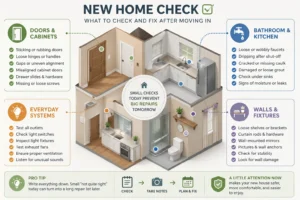
Inspect the Bathroom and Kitchen Closely
These areas deserve special attention because they combine frequent use, water, and many small components that can wear out over time. Check the caulk around the bathtub, sinks, shower, and kitchen backsplash. Look for cracks, gaps, and areas where the sealant is starting to separate. Moisture can easily get behind finished surfaces through these openings.
Check whether faucets are securely mounted, whether the handles feel loose, and whether water continues to drip after they are turned off. Inspect the grout between the tiles as well. Small cracks or missing sections may seem insignificant, but these areas can allow moisture to get behind the surface and should not be ignored.
Take a close look around the toilet, under the sinks, and along the edges of cabinets. These are often the first places where signs of moisture problems appear, yet they are easy to miss during a quick inspection.
There is no need to search for a problem in every part of the house. The most important thing is to notice small issues early and deal with them before they become more serious. This can make the move-in process much smoother and prevent minor inconveniences from eventually turning into larger repairs.
Fix the Previous Owner’s “Quick Repairs”
When buying a house, it is easy to be misled. A repair may look finished on the surface, while the problem underneath has not actually been resolved. Sometimes previous owners simply avoid addressing certain issues before selling so the property appears more attractive. Appearances can be deceptive: stains may be covered with paint, damaged drywall may be patched, or a fresh layer of caulk may be applied over an older one.
This does not automatically mean there is a hidden problem, but it is worth taking a closer look—especially when freshly repaired areas noticeably stand out from the rest of the finish.
Pay attention to the details as well: loosely secured trim, uneven baseboards, or poorly installed transition pieces between different types of flooring can all be worth checking. Sometimes new-looking hardware appears solid but starts moving as soon as you touch it. These kinds of cosmetic fixes can hide wear, damage, or signs of unsuccessful DIY repairs. It is better to understand what is going on now than deal with more serious consequences later.
Check the Walls, Floors, and Small Details
After moving in, take some time to walk through the house again and look at everything with fresh eyes. Do not focus on the furniture or layout—just inspect the walls, corners, baseboards, and floors. Look for small cracks, old holes left from mounted equipment, chipped tiles, poorly fitted laminate pieces, or loose transition strips. None of these issues are necessarily serious, but they are much easier to fix now than when the rooms are fully furnished.
If part of the floor feels uneven or slightly gives way under your feet, or if trim has started to pull away from the wall, the issue may be purely cosmetic. However, it can sometimes indicate that materials have shifted or that previous repairs were not completed properly. These details should not be dismissed too quickly. A closer look can help you understand where repairs are actually needed and where there is no reason for concern.
When the list of problems grows beyond one or two items, it can be helpful to put everything into one simple checklist. This makes it easier to see the overall scope of the work and prevents every small crack or chip from feeling like a separate source of stress. If you want to learn more about home repair and handyman services, you can visit https://fixprosolution.com.
Don’t Forget About Smoke and Carbon Monoxide Detectors
Smoke and carbon monoxide detectors are the kind of devices most people rarely think about on a daily basis. When moving into a new home, it is a good idea to check every smoke and carbon monoxide detector right away. Take a look around, make sure you know where they are located, and replace the batteries if necessary.
Just because a detector is installed on a wall or ceiling does not mean it is actually working. A quick test takes only a few seconds and can give you peace of mind. It is better to check now than discover a problem when the device is actually needed.
Make One General List Instead of Chasing Every Small Problem
As soon as you start inspecting a new home, small issues can quickly begin to add up. It is easy to feel overwhelmed and want to deal with everything at once. A much simpler approach is to keep a list, write things down, and organize them by priority instead of trying to fix everything in a single day.
Start with anything related to safety and essential systems, such as water, electricity, or heating. Then move on to issues that affect everyday comfort, including doors, switches, and plumbing fixtures. Cosmetic details can wait a little longer—the world will not fall apart if a baseboard remains slightly crooked for another week.
In the end, what initially looks like dozens of unrelated problems often turns into a clear and manageable plan. Once everything is written down, repairs can be prioritized and completed step by step.
Conclusion
The first weeks in a new home are really a period of getting to know it. Until you have walked through every room and started using the space every day, you may not know which door sticks, which switch behaves strangely, or why a particular drawer keeps getting stuck.
There is no need to overdo everything during the first weekend. Simply notice the small inconveniences and write them down as they appear. After a few days, the picture usually becomes clearer: what needs immediate attention, what you can fix yourself, and what is harmless enough to leave for later.
Interestingly, it is often these small details that make a house start to feel like your own. Not because it suddenly becomes perfect, but because you begin to understand how it works, recognize its weak spots, and know where to start.