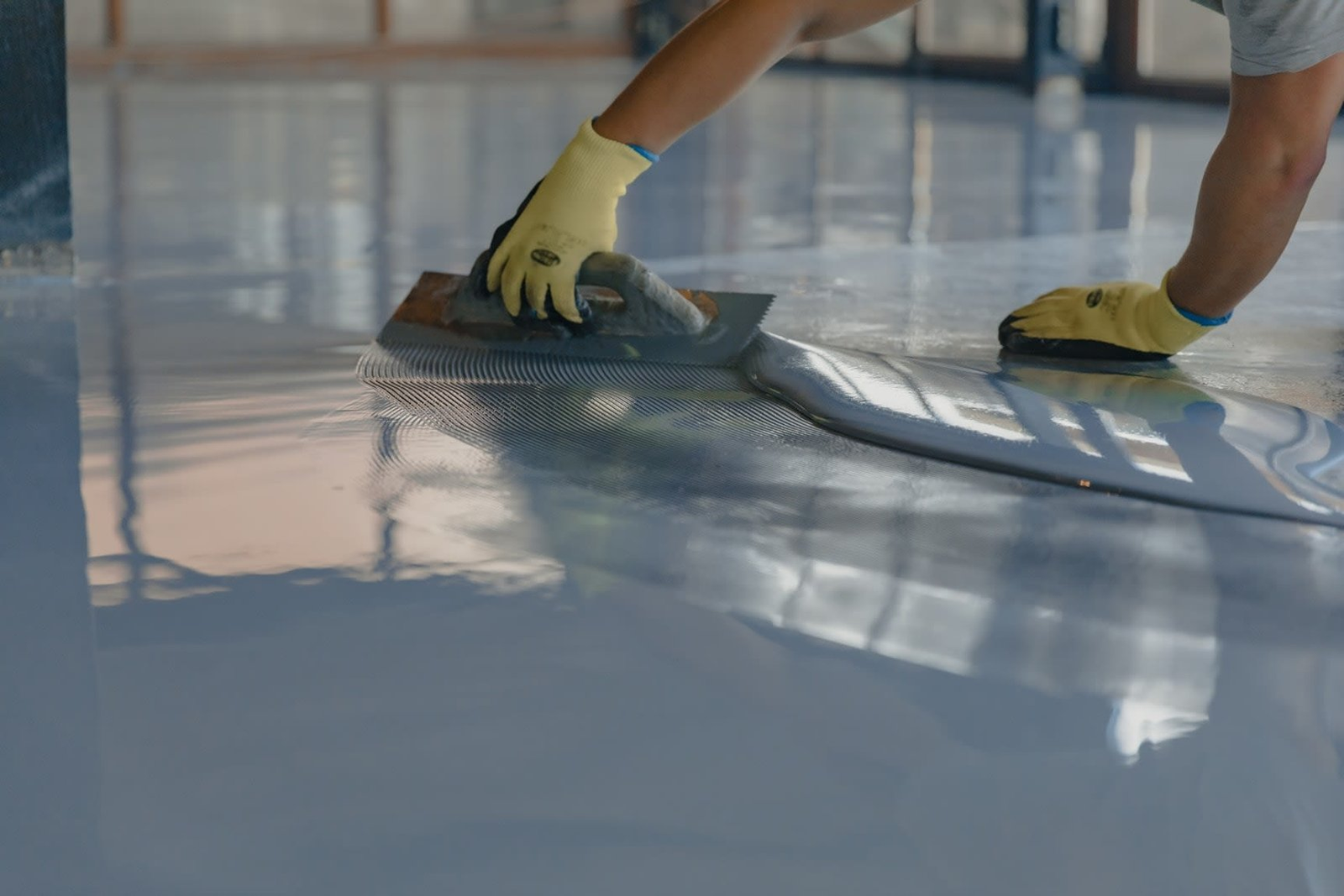
A Canadian garage floor takes more abuse than almost any other surface in the house. Slush melts off the car, road salt dissolves into puddles, hot tires press against the slab, and oil drips quietly in the corner.
Raw concrete is porous, so it absorbs all of it. The result is stained, dusty, cracked and eventually crumbling concrete. A coating turns that porous slab into a sealed, easy-to-clean surface.
This guide covers what winter does to bare concrete, how epoxy, polyaspartic and hybrid systems compare for an epoxy garage floor in Toronto, and what a coating typically costs and how long it takes.
What Ontario Winters Do to Bare Garage Concrete
Four things attack an uncoated garage floor every winter:
- Road salt and de-icers. They are chemically aggressive and draw moisture into the surface.
- Freeze-thaw cycles. Water in pores and cracks expands as it freezes, widening damage season after season.
- Hot-tire pickup. Warm tires can lift weak or poorly bonded coatings.
- Oil and chemicals. Without a sealed surface, spills soak in and stain permanently.
Toroo Coatings has installed garage and residential floors for over 10 years, and its approach to an epoxy garage floor in Toronto is a seamless system built to resist salt, chemicals and hot tires. Properly installed, Toroo estimates residential epoxy floors can last 15 to 20 years, even through Toronto’s freeze-thaw cycles.
Epoxy vs Polyaspartic Garage Floor Coatings: Which Handles Winter Better?
Neither is universally better. Each has a role.
- Epoxy. A proven, thick coating that bonds strongly to concrete. It typically costs less, but standard epoxy can yellow under UV light and is less flexible in the cold.
- Polyaspartic. Costs more, but offers excellent UV resistance, cures faster, sometimes in a single day, and works across a wider temperature range.
- Hybrid system. An epoxy base coat provides thickness and bonding strength, and a polyaspartic topcoat adds UV resistance and durability. For most Ontario garages, this combination delivers the best of both.
Decorative Flake and Metallic Epoxy Garage Floors
A coated garage doesn’t have to look industrial. Decorative flakes add texture for grip, hide minor imperfections and give the floor a finished, showroom look. Flakes are broadcast into the wet base coat and sealed under a clear topcoat.
For a more dramatic result, metallic epoxy creates marble-like patterns with single colours or blended pigments. It is more often chosen for living spaces, basements and studios, but it works in a garage that doubles as a showpiece.
Slip Resistance and Everyday Care for Coated Garage Floors
A glossy floor sounds slippery, especially when wet boots track in snow. Anti-slip additives such as aluminum oxide or broadcast aggregates add grip without making the surface hard to clean, and decorative flakes add texture on their own.
Maintenance is simple. Sweep or dust mop regularly, wash with a mild cleaner when salt residue builds up, and wipe spills rather than letting them dry. Because the surface is sealed, oil and de-icer sit on top instead of soaking into the concrete.
The same systems suit other spaces too. Basements, workshops, studios and outdoor patios all benefit from seamless, moisture-resistant finishes, and patio coatings are formulated to handle UV, rain and freeze-thaw.
Epoxy Garage Floor in Toronto: Cost and Timeline
Garage floors in the GTA are commonly quoted at around $4 to $7 per square foot, though the final price depends on:
- Cracks, corrosion or damage that need repair first
- The amount of surface preparation required
- The coating system, since polyaspartic costs more than epoxy
- Decorative options such as flakes or metallics
On timing, a standard 400 to 600 square foot garage usually takes two to three days. Each coat needs 8 to 24 hours to cure, light foot traffic is possible after 24 to 48 hours, and vehicles typically need five to seven days. Polyaspartic systems cure faster.
Optional add-ons include cove base from about $6.50 per square foot and wall painting from about $2.50 per square foot. Garage storage options such as slatwall systems and cabinets can be installed too, so one contractor can finish the whole space.
Three Questions to Ask Before You Coat Your Garage
- How will you prepare the concrete? Diamond grinding creates the profile a coating needs. A quick acid etch does not.
- Will you repair cracks and test for moisture? Both should be part of the quote.
- Which system do you recommend and why? A good answer references salt, hot tires and UV exposure, not just what is in stock.
Final Thoughts on Your Epoxy Garage Floor in Toronto
A garage coating is one of the most practical upgrades a home can get. Match the system to Ontario’s winters, ask about preparation before price, and expect a floor that cleans in minutes and looks good for years. If your garage is already stained, flaking or cracked, the sooner it is assessed, the cheaper it is to fix.