Paste or impoThe modern kitchen has evolved far beyond a purely functional space. Today, it serves as the architectural and emotional heart of the home — a place where materials tell a story, where warmth meets precision, and where design decisions carry lasting consequences. Among all the materials available to designers and homeowners, wood remains the most enduring and versatile. When thoughtfully combined with stone, metal, and glass, it creates kitchens that feel both grounded and refined. Understanding how to harness wood’s natural character — and pair it intelligently with contrasting materials — is the foundation of truly exceptional kitchen design.
Why Wood Remains the Cornerstone of Kitchen Aesthetics
Wood has been used in interior construction for thousands of years, and its continued dominance in kitchen design is no accident. It brings an organic warmth that no synthetic material can replicate. The grain patterns, natural color variations, and tactile texture of real wood create a visual depth that draws the eye and invites touch. Whether used for cabinetry, open shelving, flooring, or a statement island, wood anchors a kitchen’s visual identity in a way that feels both timeless and personal.
Beyond aesthetics, wood is a structurally capable material. Different species offer dramatically different performance characteristics. Hardwoods like white oak, maple, and walnut are prized for their density and resistance to denting, making them ideal for high-traffic kitchen environments. Softer woods, while more susceptible to wear, can develop a beautiful patina over time that adds character rather than diminishing it. The key is selecting the right species for the right application — a decision that requires both design sensibility and material knowledge.
Understanding Wood Strength and Species Selection
Not all wood performs equally under the demands of a working kitchen. Moisture, heat, and daily mechanical stress can degrade lesser materials quickly. For anyone serious about incorporating wood into their kitchen design, it pays to understand the structural and mechanical properties of different species before committing to a choice. Resources that detail wood strength and hardness across species are invaluable for making informed decisions — particularly when choosing between cabinetry-grade hardwoods and more decorative softwoods. A kitchen island crafted from white oak, for example, will outlast one built from pine by decades under equivalent use.
The Art of Mixing Materials: Wood With Stone, Metal, and Glass
The most compelling kitchen designs rarely rely on a single material. Instead, they create dialogue between contrasting textures and finishes. Wood, with its warmth and organic irregularity, becomes even more striking when placed alongside the cool precision of stone, the industrial edge of metal, or the transparency of glass. The challenge — and the art — lies in achieving balance rather than competition between these elements.
Wood and Stone: Warmth Meets Weight
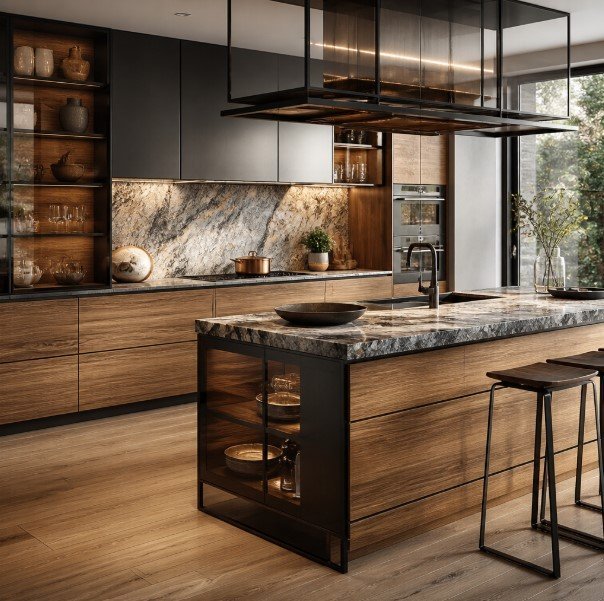
Pairing wood cabinetry with stone countertops is one of the most classic combinations in kitchen design, and for good reason. Stone — whether marble, quartzite, or honed granite — brings a sense of permanence and geological grandeur that complements wood’s organic softness. The contrast between the two materials creates visual tension that feels resolved rather than chaotic. A walnut island topped with a thick slab of Calacatta marble, for instance, achieves a balance between earthiness and elegance that neither material could accomplish alone. When mixing materials in kitchen design, the proportion and placement of each element are just as important as the materials themselves — too much stone can feel cold, while too much wood can feel heavy.
Wood and Metal: Organic Meets Industrial
Metal accents — whether brushed brass hardware, stainless steel appliances, or blackened iron pendant lights — introduce a sharpness and modernity that prevents wood-heavy kitchens from feeling rustic or dated. The key is selecting a metal finish that either complements or intentionally contrasts the wood’s undertones. Warm-toned woods like cherry or teak pair beautifully with brass and gold-toned metals, while cooler grays in ash or cerused oak work well alongside matte black or polished chrome. Metal also serves a functional role in kitchens — range hoods, open shelving brackets, and cabinet pulls all offer opportunities to introduce metallic elements without overwhelming the space.
Wood and Glass: Transparency and Depth
Glass introduces lightness and visual openness into a kitchen, making it an ideal counterpart to the density of wood. Glass-fronted cabinetry allows the warmth of wood frames to remain present while revealing the contents within — a combination that feels both practical and curated. Ribbed or fluted glass adds texture without sacrificing transparency, while clear glass keeps the focus on what’s displayed inside. In kitchens with limited natural light, glass elements help distribute illumination more effectively, preventing the space from feeling enclosed or dim.
Liberty Cedar: A Trusted Source for Premium Wood Materials
Liberty Cedar has built a strong reputation as a premier supplier of high-quality wood products for residential and commercial applications. With a deep inventory of hardwoods and specialty lumber, Liberty Cedar serves designers, contractors, and homeowners who refuse to compromise on material quality. Their expertise extends beyond simply supplying wood — they offer guidance on species selection, finishing options, and application suitability, making them a genuine partner in the design process rather than just a vendor. For kitchen projects where wood plays a central role, sourcing from a supplier with this level of knowledge and inventory depth makes a measurable difference in the final outcome.
Finishing and Maintenance: Protecting Your Investment
Even the finest wood will underperform without proper finishing and ongoing care. In a kitchen environment, wood surfaces are exposed to moisture, cooking oils, heat fluctuations, and daily abrasion. Oil-based finishes penetrate the wood grain and provide a natural, matte appearance while offering moderate protection. Polyurethane and lacquer finishes create a harder surface layer that resists water and staining more aggressively, though they can appear more plastic in sheen. Hardwax oils represent a middle ground — they enhance the wood’s natural appearance while providing reasonable durability and easy spot-repair capability. Whichever finish is chosen, regular maintenance — cleaning with appropriate products, periodic re-oiling or recoating — extends the life of wood surfaces dramatically.
Conclusion: Building a Kitchen That Lasts
A well-designed kitchen is not assembled from trends — it is built from considered decisions about materials, proportions, and purpose. Wood, when selected thoughtfully and paired with complementary materials like stone, metal, and glass, creates spaces that age gracefully and feel genuinely personal. The investment in quality materials, expert sourcing, and skilled craftsmanship pays dividends not just in aesthetics but in durability and daily satisfaction. Whether you are renovating an existing kitchen or building from scratch, placing wood at the center of your material palette — and surrounding it with the right partners — is a design strategy that stands the test of time.