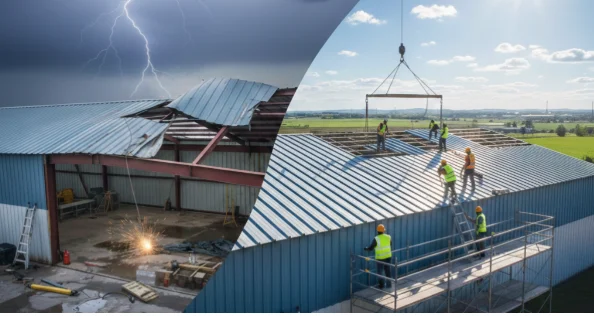
Metal buildings are the backbone of Houston’s industrial and commercial landscape. From warehouses in the Port of Houston to manufacturing facilities in Pasadena, these structures endure relentless heat, humidity, and the occasional hurricane. Consequently, property owners face a critical question that directly impacts their bottom line: when should you treat a repair as an emergency, and when can it wait for scheduled maintenance?
Understanding this distinction isn’t just about saving money—it’s about protecting your investment, ensuring worker safety, and avoiding catastrophic failures that could shut down operations for weeks. In this comprehensive guide, we’ll explore the decision-making framework that helps you determine the right approach for every situation.
The True Cost of Reactive Maintenance
Most facility managers operate in crisis mode, addressing problems only when they become impossible to ignore. However, this reactive approach typically costs three to four times more than proactive maintenance strategies. When a steel column begins showing signs of stress, waiting until it buckles under load transforms a manageable repair into a full-scale structural emergency.
Moreover, emergency repairs come with hidden costs beyond the immediate fix. Rush orders for materials carry premium pricing, overtime labor rates can double your expenses, and business interruption losses often dwarf the actual repair costs. A manufacturing plant that loses two days of production while waiting for emergency structural work might sacrifice $50,000 in revenue to save $3,000 on a repair that could have been scheduled during planned downtime.
Nevertheless, some situations genuinely require immediate action. The key lies in developing the expertise to distinguish between urgent threats and issues that can be strategically addressed during scheduled maintenance windows.
Critical Warning Signs That Demand Immediate Action
Certain structural issues in metal buildings require instant response, regardless of your maintenance schedule. First and foremost, any visible deformation in load-bearing components poses an imminent danger. When steel beams sag, columns bow, or connections separate, the structural integrity of your entire building is compromised. In these situations, experienced Houston building repair specialists should evaluate the situation within hours, not days.
Additionally, active water intrusion through the roof structure creates a cascading series of problems. Beyond the obvious damage to inventory and equipment, water accelerates corrosion in steel components and compromises the building envelope. What starts as a small leak during a thunderstorm can evolve into a $50,000 roof replacement project within months if left unaddressed.
Similarly, exposed electrical components near damaged structural elements create life-threatening hazards. When metal panels pull away from the frame near electrical installations, or when water reaches junction boxes, immediate shutdown and repair become non-negotiable priorities.
Furthermore, any damage that creates falling hazards—loose panels, detached gutters, or compromised overhead components—requires urgent attention. The liability exposure alone justifies emergency response, even before considering the operational disruptions.
The Strategic Value of Preventive Maintenance
In contrast to emergency repairs, scheduled maintenance allows you to control timing, costs, and outcomes. Property owners who invest in quarterly or semi-annual inspections typically identify issues while they’re still minor. A small crack in a steel column might cost $800 to repair during scheduled maintenance but escalate to $8,000 if it requires emergency structural column repair after the column fails.
Additionally, scheduled maintenance enables better resource allocation. You can negotiate better rates with contractors, schedule work during low-production periods, and order materials without rush charges. This strategic approach also allows you to bundle multiple repairs into a single mobilization, reducing overhead costs significantly.
Moreover, preventive maintenance extends the lifespan of your metal building substantially. Regular inspections catch corrosion before it compromises structural members, identify failing fasteners before panels detach, and detect water infiltration before it causes extensive damage. The result? A building that serves reliably for 40-50 years instead of requiring major reconstruction after 20.
Creating Your Maintenance Decision Matrix
Successful facility managers develop a systematic approach to categorizing building issues. This decision matrix helps you respond appropriately to every situation you encounter.
Tier One: Emergency Response Required
These issues demand immediate professional assessment and typically require work to begin within 24-48 hours:
- Structural deformation or failure in load-bearing components
- Active water intrusion during weather events
- Electrical hazards near damaged building components
- Any condition that creates imminent danger to occupants
- Damage that exposes inventory or equipment to weather
Tier Two: Urgent But Schedulable
These problems require attention within 1-2 weeks but don’t pose immediate dangers:
- Minor roof leaks that aren’t currently active
- Corroded fasteners or connections showing early failure signs
- Damaged wall panels that don’t threaten structural integrity
- Non-critical drainage issues
- Deteriorated caulking or sealants
Tier Three: Planned Maintenance
These items can be addressed during regularly scheduled maintenance cycles:
- Routine inspections and cleaning
- Repainting to prevent corrosion
- Gutter maintenance
- Door and hardware adjustments
- Preventive coating applications
The Weather Factor in Houston
Houston’s climate adds unique complexity to maintenance decision-making. The region’s hurricane season runs from June through November, creating distinct planning windows. Ideally, major structural work should be completed before June, while minor exterior work can proceed year-round between storms.
Furthermore, the extreme heat of Houston summers affects both the urgency and execution of repairs. Metal components expand significantly in 100-degree temperatures, making some repairs more challenging. Therefore, identifying issues in spring allows you to schedule complex repairs during milder weather, improving both safety and quality.
On the other hand, winter cold fronts—while less extreme than northern climates—still create thermal cycling that stresses compromised components. A crack that seems stable in September might propagate rapidly during December’s temperature fluctuations, shifting it from scheduled maintenance to urgent repair status.
Building Your Maintenance Calendar
A well-structured maintenance calendar transforms reactive chaos into proactive management. Begin by scheduling comprehensive inspections twice annually—ideally in March and September. These timing windows allow you to address issues before summer’s heat or hurricane season arrives.
During each inspection, document every concern with photos, measurements, and severity assessments. This creates a prioritized repair list that guides your maintenance budget and scheduling decisions. Items flagged as Tier Two or Three can be bundled into quarterly maintenance events, maximizing efficiency while minimizing disruptions.
Additionally, train your on-site staff to recognize early warning signs between formal inspections. A warehouse supervisor who spots rust staining under a beam can alert you to investigate before minor corrosion becomes structural compromise. This ground-level awareness system catches problems in their earliest, most affordable stages.
The Financial Framework
When evaluating whether to treat a repair as an emergency or scheduled maintenance, consider the total cost equation. Emergency repairs include direct costs (labor, materials, equipment), indirect costs (production losses, overtime premiums, rush charges), and opportunity costs (diverted maintenance budget, deferred preventive work).
Conversely, scheduled repairs allow you to secure competitive bids, purchase materials at standard pricing, and minimize operational disruption. The typical cost differential ranges from 150% to 400%, depending on the complexity and timing requirements.
Therefore, the threshold question becomes: “Will delaying this repair likely increase the total cost by more than the premium I’d pay for emergency service?” If a $2,000 scheduled repair might become a $15,000 emergency next month, immediate action makes financial sense. However, if a $5,000 repair can wait three months without significant escalation risk, scheduling it strategically saves money while maintaining safety.
Mastering the Balance
The most successful metal building owners recognize that emergency and scheduled repairs both have their place in comprehensive facility management. The goal isn’t to eliminate all emergency repairs—some situations genuinely require immediate response. Instead, aim to minimize emergencies through diligent inspection, strategic planning, and prompt attention to early warning signs.
By developing the expertise to categorize issues correctly, you’ll protect your investment, maintain safe operations, and control costs effectively. Remember that every dollar invested in preventive maintenance typically returns three to four dollars in avoided emergency repairs. Ultimately, the buildings that serve reliably for decades belong to owners who master this critical balance between immediate response and strategic planning.