A small home office is not a smaller version of a corporate office. It is a different room, with a different job: one desk, one chair, and enough order around them that work starts quickly and ends cleanly. In a large office you can spread out and leave things where they fall. In a small one, every inch has to earn its place, because a desk that is too deep, a chair that cannot tuck away, or a shelf that holds the wrong things will take the whole corner down with it. Get the desk, the light and the boundary right, though, and a small corner works better than a large room that was never really planned.
This guide works through the decisions in the order that matters. Start with where the desk goes, then the desk itself, then the chair, then storage, then light, then the line between work and home. Buying the desk first and working out where it goes later is how small home offices end up cramped, no matter how good the desk is. The ideas below work in a spare room, a bedroom corner, or a living-room alcove, and most of them cost nothing at all.
Put the desk where the day already happens
Before you buy anything, decide where work already happens in your home. Most people already have a spot: the kitchen table in the morning, the sofa with a laptop in the evening, a corner of the bedroom that has slowly collected a charger and a notebook. That spot is telling you something. It is near the light, near a plug socket, and away from the busiest walkway in the house. Put the desk there, or as close to there as you can.
Then measure properly. Wall to wall, the width of the alcove or the corner, the position of the door, the window and the nearest plug socket. A tape measure takes ten minutes and saves the most common mistake in small offices: a desk that looked right in the shop and does not fit past the door, under the window, or beside the radiator. Measure the chair space too. You need room to pull the chair out and stand up without hitting the wall behind you, and a clear path of about 30 inches behind the chair is the minimum for a corner you can actually work in.
There are only a few placements that work in a small home office, and they are all worth trying on paper before you lift anything. The first is facing the wall: the desk against the longest clear wall, with shelves above it and the chair facing the room. It is the simplest, and it suits a spare room or a bedroom corner where the wall is the only free surface. The second is facing the window: the desk under or beside the window, so you work in daylight and look out when you pause. It suits rooms where the window wall is free, and it makes the smallest corner feel open. The third is the alcove desk: a desk fitted into a recess, a wardrobe nook, or the end of a living room, with a screen, a curtain or a tall shelf marking where work ends and home begins. The same zoning thinking runs through our small apartment design ideas — one clear line beats a dozen small competing details — and in a home office that line is what lets you stop working at the end of the day.
Choose the desk by the work, not by the wish
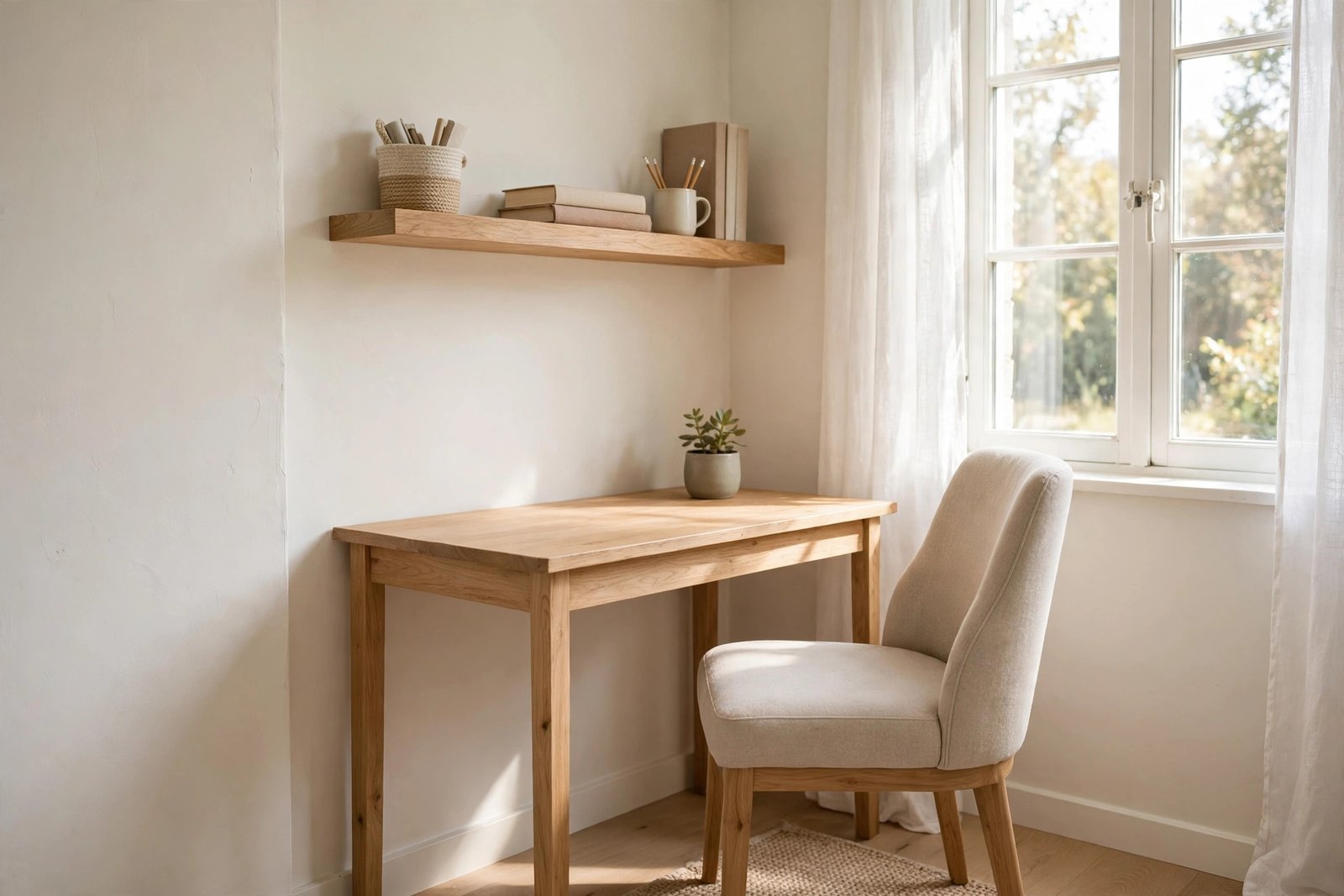
Desk size is the single biggest decision in a small home office, and it is the one most people get wrong. A desk that is too deep pushes you back from the wall and eats the chair space. A desk that is too wide leaves no room for a shelf, a lamp, or a clear walkway. The right desk for a small office is usually a slim desk, about 20 to 24 inches deep and 40 to 48 inches wide, with a plain top and legs that let you see the floor underneath. Slim legs matter more than most people expect: when you can see the floor running under the desk, the desk reads as a piece of furniture in a room, not as a wall.
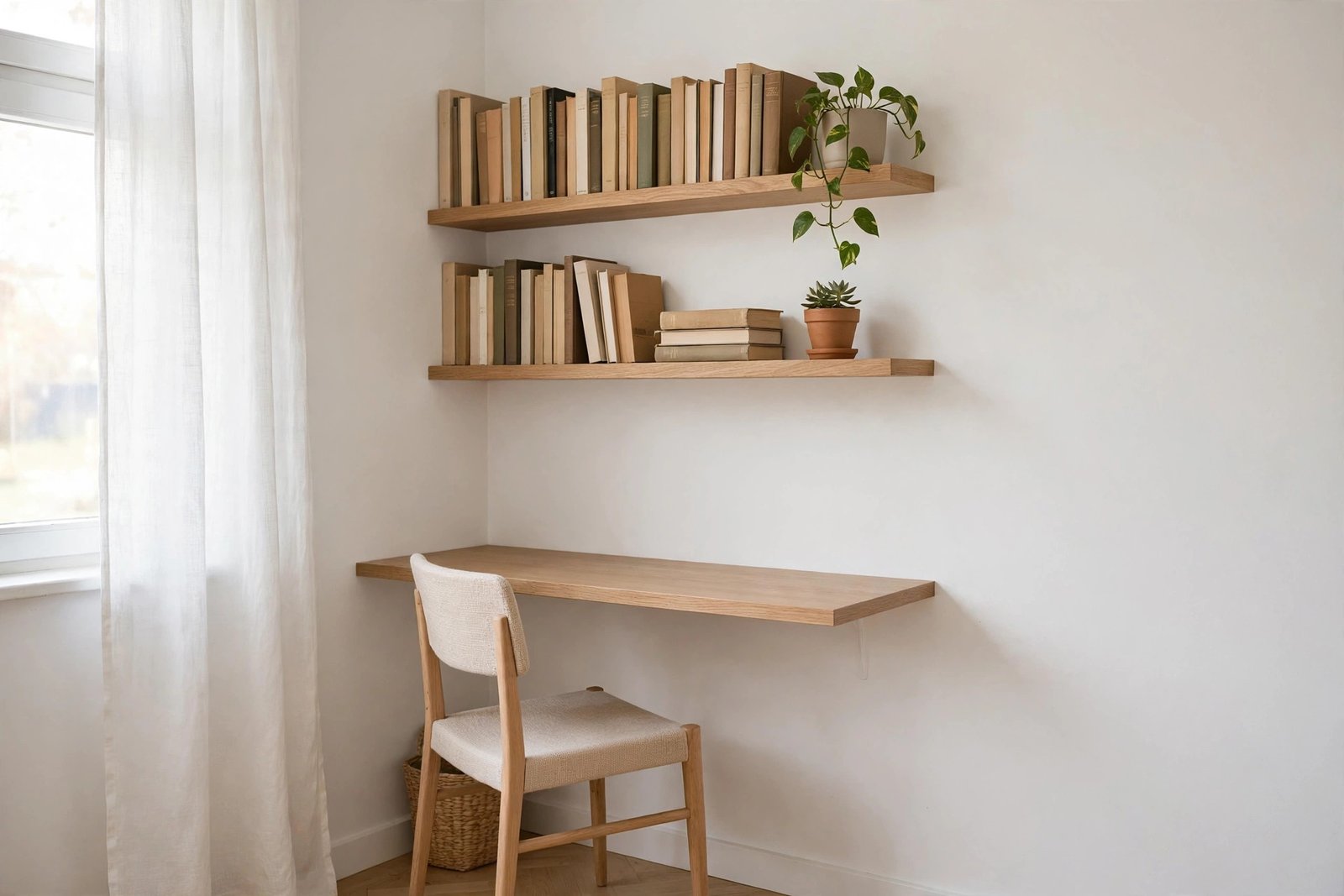
Choose the desk by what you actually do on it. A laptop, a notebook and a cup of tea need far less desk than two monitors, a keyboard and a stack of files, and most people buy for the second setup while living the first. Write down what sits on your desk on a normal working day, then measure that pile. If it fits on a 40-inch desk, buy the 40-inch desk. A wall-mounted desk, or a fold-down desk, is worth considering in the smallest corners: it gives you a full working surface when it is down and the whole floor back when it is up.
Keep the desk top almost empty. A laptop or monitor, a lamp, one notebook, one pen — and nothing else that lives there permanently. A desk covered in papers, cables, mugs and chargers is not a desk any more, it is a shelf at elbow height, and it makes the room feel cluttered from the chair. One small tray for the things in use today, and a home for everything else, is the whole system.
Buy the chair before the shelves
The chair is the piece most small home offices get wrong twice: too big, and bought last. A large office chair with wide armrests and a high back will dominate a small corner, and it will not tuck under the desk when the working day ends. The right chair for a small office is a compact task chair with a low or medium back, adjustable height, and no wide armrests — or a simple wooden chair with a cushion, if you work in short sessions and move around during the day.
Test the chair at the desk, not in the shop. Sit in it, pull it up to the desk, and check three things: your feet reach the floor flat, your elbows sit at desk height without hunching, and the chair slides fully under the desk when you stand up. A chair that cannot tuck away leaves the office looking occupied all evening, and a room that always looks occupied is a room you can never relax in. If the chair has wheels, check that it rolls on your floor without catching the rug — a rug under a wheeled chair is a daily frustration, and a hard floor or a flat chair mat solves it.
Spend on the chair before you spend on the shelves. A good chair protects your back for eight hours a day; a pretty shelf holds books you rarely open. If the budget only stretches to one good purchase, make it the chair, and let the storage wait a week.
Build storage up, not out
Storage in a small home office has to go up the walls, not out across the floor. A low, wide filing cabinet takes floor space that the room cannot spare. A tall, narrow shelf takes wall space the room already has, and it draws the eye upward, which makes the corner feel taller. Two shelves above the desk hold more than three low boxes spread around the room, and they leave the floor clear.
Closed storage matters more than open storage. Open shelves look good in photographs and turn into visual clutter within a week, because everything on display has to stay tidy. A closed box, a drawer unit under the desk, a basket on the shelf — each one hides the real life of the office, the chargers, the spare cables, the notebooks from last year, and lets the desk stay calm. The same rule shapes the small bedroom design ideas on this site: one clear surface reads as more space, and in a home office that surface is the desk itself.
Give every category one home, and label it. One box for cables, one shelf for books in use, one drawer for stationery, one folder for papers that need action this week. Papers with no home will pile on the desk, and a pile on the desk is the fastest way to make a small office feel small. At the end of each working day, clear the desk completely — laptop closed, notebook away, mug in the kitchen — and the next morning starts with a clean surface instead of yesterday’s mess.
Light it like a workplace
One ceiling light leaves a small home office in shadow by late afternoon, and a small corner slips into a cave feeling faster than a large room. Layer the light instead: daylight from the window during the day, a desk lamp for the working surface, and the ceiling fixture for the evening. Three sources of light at three different heights make the corner feel like a workplace, because the eye can see the whole desk instead of one bright pool in the middle.
Place the desk lamp on the opposite side from your writing hand, so your hand does not cast a shadow over the page or the keyboard. A warm white bulb, around 2700K to 3000K, suits evening work; a cooler bulb suits detailed daytime work, but keep all the bulbs in the corner the same warmth, so the light does not change colour from one side of the desk to the other. And keep the monitor out of direct sunlight: a screen facing the window glares by mid-morning, while a screen at right angles to the window stays readable all day.
When the room is a living-room corner rather than a spare room, the same lighting rules still apply — and the guide on how to make a small living room feel bigger without renovation makes the same point about light: clear surfaces, one clear zone and layered light read as space. A desk lamp that switches off at the end of the day is also a signal: when the lamp goes off, work is over.
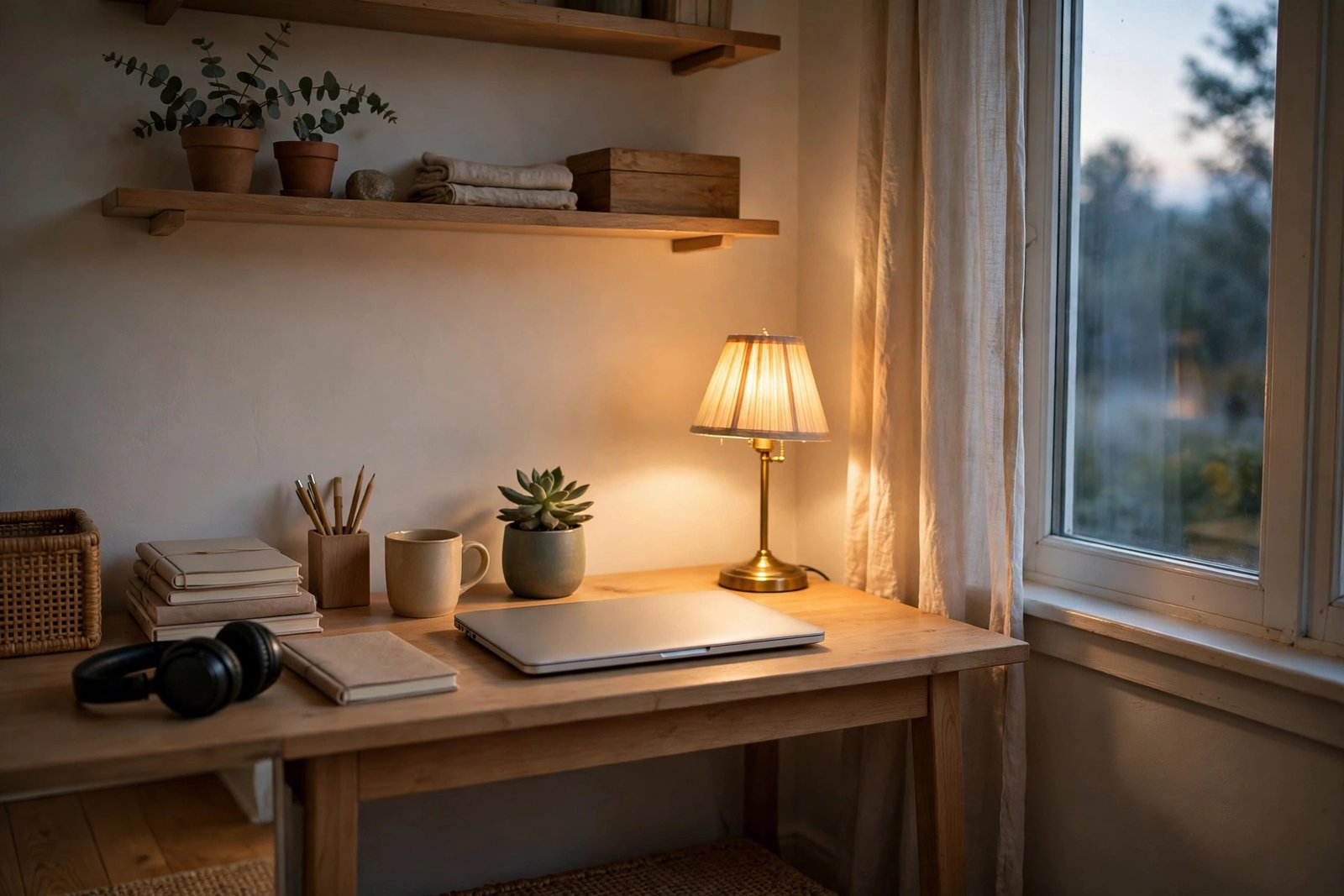
Control the cables before they control the desk
Cables are the quietest clutter in a small home office, and the hardest to ignore once you notice them. A laptop charger, a monitor cable, a phone cable and a lamp cable, each with its own plug, will tangle behind the desk within a week and pull the whole corner down with them. Fix them once, properly, and they stay fixed.
Use one power strip, fixed to the underside of the desk or to the wall behind it, so all the plugs live in one place and the strip itself is off the floor. Run the cables along the back edge of the desk with two or three adhesive clips, and label the plugs you unplug often. A cable tray under the desk costs little and hides the whole tangle from the room. The aim is simple: from the chair, you should see the desk and the wall, not a nest of black wires.
Go wireless where it costs nothing. A wireless keyboard and mouse remove two cables at once, and a laptop that charges over one cable removes the rest. Every cable you remove is one less thing to dust, one less thing to trip over, and one less visual edge in a small room.
Draw the line between work and home
The hardest part of a small home office is not the furniture — it is stopping. When the desk is in the living room or the bedroom, work is always visible, and visible work is hard to leave alone. Draw the line deliberately. A rug under the desk marks the office zone on the floor. A screen, a tall plant, or a bookshelf turned sideways marks it at eye level. A curtain over an alcove desk closes the office at the end of the day, and closing it is a ritual worth keeping.
Keep work objects inside the zone and home objects outside it. The laptop, the notebook and the work papers live on the desk or in the office drawer. The television remote, the children’s toys and the evening book live outside the zone. When the two sets mix, the room stops being either an office or a home, and it becomes a storage room with a chair in it.
End the day the same way every day. Close the laptop, clear the desk, switch off the desk lamp, and walk away. It takes two minutes, and it is the habit that makes a small office sustainable — the same kind of small daily reset that keeps any small room working, and the same thinking behind the furniture choices in our guide to what furniture makes small rooms look larger. A room that resets every evening is a room you can return to every morning.
Keep the background calm for calls
Most small home offices are also video-call rooms now, and the background matters. The camera sees whatever is behind you, so make that one wall deliberate: a plain wall, one shelf with a plant and a book, or a single framed print. A busy background — a bed, a drying rack, a pile of boxes — distracts every call, however good your work is.
Face the light for calls. Sit with the window in front of you or to your side, never behind you, or the camera will show a silhouette instead of a face. A small ring light or a desk lamp aimed at the wall behind the camera lifts the light on your face without harsh shadows. Test it once with a friend on a call before an important meeting, and adjust the lamp and the chair until your face is clear and the background is calm.
Keep one tidy square metre behind the chair, even if the rest of the room is mid-project. That square is the only part of the office most colleagues ever see, and keeping it tidy costs nothing. The rest of the room can wait until the weekend.
A simple plan to start this weekend
Do not build the home office this weekend. Do the four things that cost almost nothing and change how the corner feels by Monday. First, measure the corner and the chair space, and move anything that blocks them. Second, clear the desk completely, then put back only the laptop, the lamp and one notebook. Third, fix the cables: one power strip, clipped to the desk, with every cable run along the back edge. Fourth, mark the zone — a rug under the desk, or a plant beside it — so the eye knows where work ends and home begins.
Live with that version for two weeks before spending anything bigger. You will learn whether the desk is genuinely the right size, whether the chair is comfortable for a full day, and which storage is actually missing. If the work grows beyond a weekend — building a fitted desk into an alcove, moving a socket, or a full room re-fit — that is the point to get a professional view of the cost before you commit to a build, as our interior designer cost guide explains.
A small home office rewards order, not spending. Place first, desk second, chair third, storage and light last, and a clear line between work and home above all. Follow that order and the same square footage works better, stores more, and lets you stop at the end of the day — which is the whole point of the exercise.
Frequently asked questions
Where is the best place for a small home office?
Where work already happens: near the light, near a plug socket, and away from the busiest walkway in the house. A desk facing the wall suits a spare room or bedroom corner; a desk facing the window suits rooms where the window wall is free; an alcove desk with a screen or curtain marking the boundary suits a living-room corner.
What size desk is best for a small home office?
A slim desk, about 20 to 24 inches deep and 40 to 48 inches wide, with a plain top and legs that let you see the floor underneath. Measure what actually sits on your desk on a normal working day first — a laptop, a notebook and a cup of tea need far less desk than two monitors and a stack of files.
How do I fit a home office into a small bedroom?
Put a slim desk against the clearest wall, use shelves above it instead of floor storage, and choose a chair that tucks fully under the desk. Keep work objects on the desk or in one drawer, and clear the desk every evening so the bedroom feels like a bedroom again when the working day ends.
How can I make a small home office look tidy on video calls?
Make the wall behind you deliberate: a plain wall, one shelf with a plant and a book, or a single framed print. Sit with the window in front of you or to your side, never behind you, and keep one tidy square metre behind the chair — that is the only part of the office most colleagues ever see.
Do I need a separate room for a home office?
No. A corner, an alcove or the end of a living room works well, as long as the zone is marked — a rug under the desk, a screen, a tall plant or a curtain — and the desk is cleared at the end of the day. A separate room helps, but a clear boundary and a daily reset matter more than a door.
How do I hide cables in a small home office?
Use one power strip fixed to the underside of the desk or the wall behind it, run the cables along the back edge of the desk with adhesive clips, and use a cable tray under the desk to hide the tangle. Go wireless where it costs nothing — a wireless keyboard and mouse remove two cables at once.