A backyard pool can look beautiful in real life and still feel messy in photos. The camera notices things people ignore. A crooked chair. A hose near the wall. a towel over the fence. leaves near the steps. sunscreen bottles on the table. a pool toy floating in the corner.
This matters more often than people think.
Maybe you are taking photos for a family album. Maybe you need updated home records. Maybe relatives are visiting and you want a clean picture of the backyard. Maybe you are preparing a rental listing, insurance file, renovation plan, or seasonal before-and-after folder.
Whatever the reason, a pool area does not need to be staged like a magazine spread. In fact, overstyling can make it feel fake.
The goal is simpler: make the space look clean, natural, and easy to enjoy.
Start With the Camera View, Not the Whole Yard
Do not begin by cleaning the entire backyard. Start by choosing the photo angles.
Stand at the back door. Take one test photo. Then stand near the far end of the pool. Take another. Try the main seating area. Try the side gate if it gives a good view.
Now look at the photos.
The camera will show you what actually matters. Maybe the far flower bed is not visible at all. Maybe the storage bin in the corner stands out more than expected. Maybe the pool steps matter more than the lawn.
This keeps you from wasting time.
Photo prep should focus on what the lens sees, not every square foot of the property.
Remove the “Almost Invisible” Clutter
Some clutter feels small in person but loud in a photo.
A garden hose. One pair of sandals. A half-empty drink. A faded pool noodle. An old towel. A bottle of sunscreen. A loose brush. A single chair cushion turned the wrong way.
These items break the clean lines of a pool photo.
Walk the frame and remove anything that does not support the image. Put tools in the garage. Move towels to a basket. Place toys inside a deck box. Clear the patio table.
You are not hiding real life. You are quieting the background.
A good pool photo should let the water, light, and outdoor space speak first.
Keep Furniture Straight but Lived-In
Patio furniture should look orderly, but not stiff. If every chair is lined up too perfectly, the space may feel staged. If chairs are scattered, the photo feels careless.
Aim for relaxed symmetry.
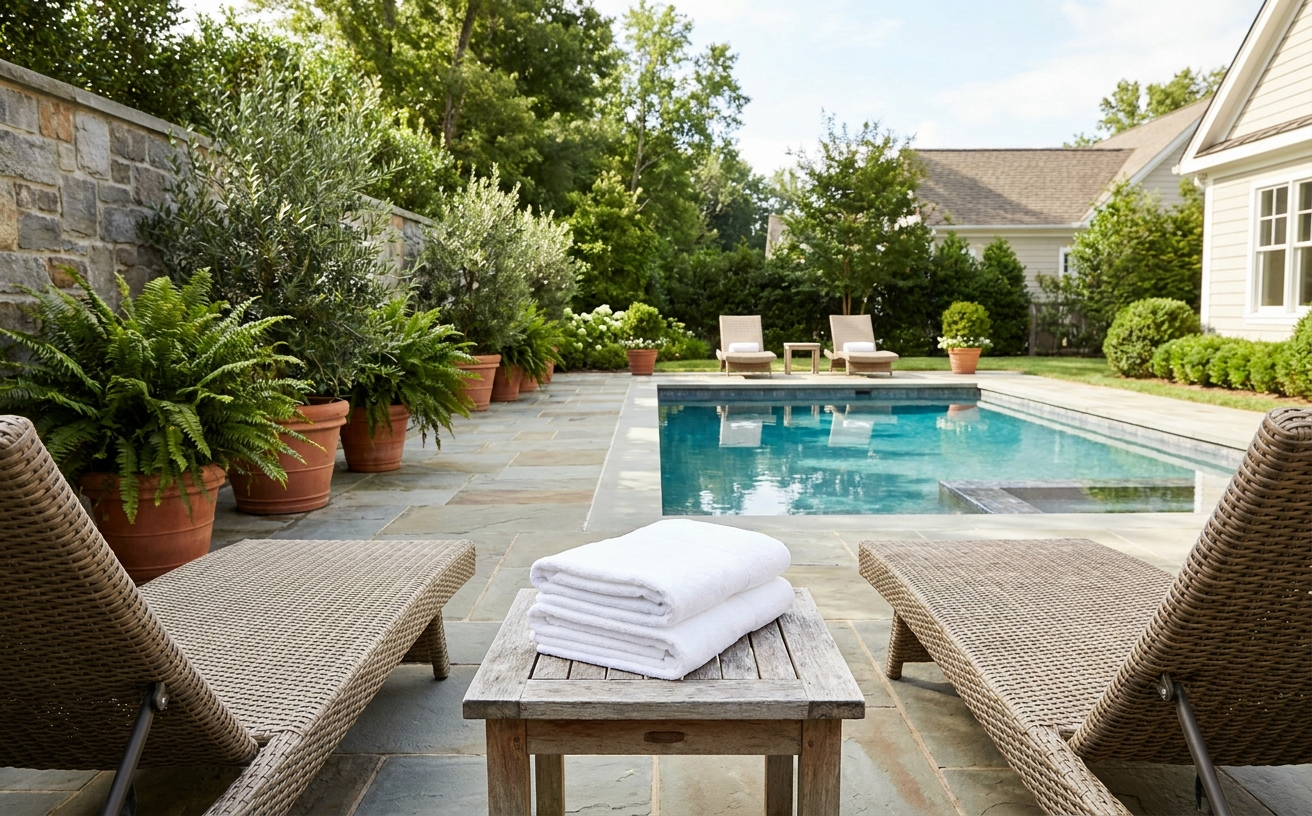
Straighten chairs around the table. Angle lounge chairs slightly toward the water. Fold towels neatly if you use them. Keep cushions smooth but not overly arranged.
A pool area photographs well when it looks ready for people, not abandoned after people left.
Think of it as “Sunday afternoon ready.”
Clean, comfortable, and natural.
Watch the Waterline
The waterline is one of the most important parts of a pool photo. It frames the image. If leaves, pollen, or small debris gather there, the photo can look less fresh even if the rest of the yard is nice.
Before taking pictures, check the visible edges.
Look near the steps, corners, and shallow end. These are common spots for debris to collect. Skim what is obvious. Move floating toys. Make sure the water surface is not visually crowded.
You do not need to make the pool look unreal.
You only need the first glance to feel clean.
The viewer should notice the pool, not the maintenance details.
Build a Photo Prep Checklist
If you take pool photos more than once a year, create a short checklist. This makes the process faster every time.
Your checklist might include:
- Choose photo angles.
- Clear tools and hoses.
- Straighten chairs.
- Remove loose toys.
- Check waterline and steps.
- Fold towels or remove them.
- Wipe table surfaces.
- Take one test photo before final shots.
Keep the list in a home folder or phone note.
If you track backyard resources there, a note may include robot pool cleaner as one pool-related reference beside photo prep steps, seasonal records, and outdoor maintenance reminders.
The checklist keeps photo day calm.
It also prevents you from forgetting the same small details every time.
Use Towels Carefully
Towels can help or hurt a photo. A neatly folded towel on a lounge chair can make the pool feel inviting. A pile of damp towels can make it look messy.
Use towels only if they add warmth.
Choose two or three clean towels. Fold them simply. Keep colors calm if you want the photo to feel polished. Avoid placing towels on every chair unless the scene needs it.
If towels look forced, remove them.
Sometimes the cleanest photo has no towel at all.
The goal is not decoration. The goal is visual ease.
Do Not Overload the Table
Outdoor tables collect objects quickly. Cups, candles, plants, sunscreen, speakers, plates, mail, toys, sunglasses, and napkins can all appear in one frame.
For photos, keep the table simple.
One pitcher. One plant. One book. One tray. Or nothing.
A clear table makes the whole patio feel larger. It also keeps the eye moving toward the pool instead of stopping on clutter.
If you want the space to feel lived-in, add one intentional item.
A lemonade pitcher or folded magazine can work. Five unrelated objects will not.
Check Reflections
Pools reflect light, trees, chairs, fences, and sky. Reflections can make a photo look beautiful, but they can also reveal clutter from another angle.
Before taking final photos, look at the water surface.
Do you see a trash can reflected? A storage bin? A bright object that pulls attention? A crooked umbrella?
Move distracting objects if possible.
This is a detail many homeowners miss because they look at the patio, not the reflection.
The camera sees both.
Choose the Right Time of Day
Midday sun can make pool photos harsh. Shadows may be sharp. surfaces may look too bright. The water can glare.
Early morning or late afternoon often works better.
The light is softer. The water looks calmer. Patio furniture has more shape. The yard feels warmer and less flat.
If you are taking practical photos for records, any clear light may be fine. If you want the pool area to feel inviting, timing matters.
Avoid taking photos when the sun is directly blasting the main seating area.
Soft light makes the backyard feel more comfortable.
Keep the Lawn and Plants Secondary
A pool photo does not require perfect landscaping. The yard only needs to look cared for.
Move dead leaves from visible areas. Trim anything that blocks the main view. Remove empty pots if they stand out. Water plants if they look tired.
Do not start a full gardening project right before taking photos.
That can turn a simple task into an all-day job.
The pool area should be the focus. Landscaping supports the image, but it does not need to steal the day.
Take One Wide Shot and Several Detail Shots
A wide shot shows the whole pool area. Detail shots capture the feeling.
Take both.
Wide shots are useful for records, listings, planning, or showing the full layout. Detail shots are useful for memory and atmosphere.
Good details include:
- Light on the water
- A clean towel basket
- A shaded chair
- Pool steps
- A patio table
- Evening lights
- A corner of landscaping
These images tell a fuller story.
They show how the backyard feels, not only how it is arranged.
Avoid Making the Pool Look Unused
A photo can be too empty. If every object is removed, the pool may look cold.
Leave small signs of real life.
A chair angled toward the water. A folded towel. A clean side table. A book. A pair of sunglasses. A pitcher on the table.
These details suggest that the space is enjoyed.
The key is restraint.
A few intentional items create warmth. Too many create clutter.
Save Photos by Season
After taking photos, save them in a clear folder. Use names that help later.
“Pool Spring 2025.”
“Backyard After Patio Reset.”
“Summer Pool Photos.”
“Storm Before and After.”
Seasonal photos help you compare changes over time. They are useful for home planning, repairs, landscaping, and memories.
A pool area changes with weather, use, and family life.
Photos help you see that change clearly.
A Better Pool Photo Starts With Less
Most backyard photos improve when homeowners remove more than they add. Fewer tools. fewer toys. fewer loose items. fewer distractions near the waterline.
The pool does not need to look staged. It needs to look cared for.
A clean frame, soft light, clear surfaces, and a calm water view can make an ordinary backyard feel inviting.
Good pool photos are not about pretending the home is perfect. They are about showing the outdoor space at its most natural and usable.
When the camera sees order, the viewer feels ease.
That is what makes a pool photo work.