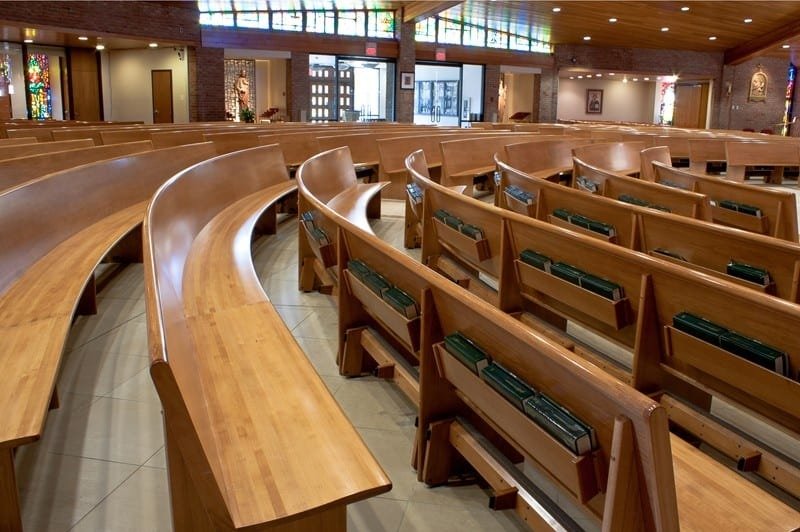
Choosing the right seating arrangement is one of the most important long-term decisions a church can make. Seating impacts not only comfort, but also how a space is used for worship, fellowship, and community events. Broadly, most churches consider two main approaches: fixed seating and flexible seating. Each option has distinct advantages and drawbacks, and the best choice often depends on a congregation’s size, traditions, and future plans.
Understanding Fixed Church Seating
Fixed seating typically refers to pews or permanently installed chairs that are anchored to the floor. This style has been a hallmark of church architecture for centuries.
Pros of Fixed Seating
One of the primary benefits of fixed seating is order and consistency. Permanently installed seating creates clear aisles, predictable sightlines, and a sense of structure that many congregations appreciate. This can be especially helpful for larger services, weddings, or formal ceremonies where organization matters.
Fixed seating is also known for its durability. Since it is designed to stay in place, it often withstands years—sometimes decades—of regular use. For churches with stable attendance and a traditional worship style, fixed seating can reinforce a sense of permanence and reverence.
Cons of Fixed Seating
The biggest limitation of fixed seating is flexibility—or lack thereof. Once installed, it is difficult and costly to reconfigure the space. This can be challenging for churches that host multiple types of gatherings, such as youth programs, small groups, or community outreach events.
Fixed seating can also make future renovations more complex. As congregations evolve, a layout that once worked well may no longer suit changing needs, accessibility requirements, or new worship formats.
Exploring Flexible Church Seating
Flexible seating generally includes movable chairs or modular seating systems that can be rearranged as needed. This approach has become increasingly popular in multi-purpose worship spaces.
Pros of Flexible Seating
Adaptability is the clear advantage here. Flexible seating allows churches to transform their sanctuary or fellowship hall quickly, accommodating everything from worship services to concerts, classes, or community meals. This is particularly useful for growing or changing congregations.
Another benefit is space efficiency. Chairs can be stored when not in use, freeing up room for activities that don’t require traditional seating. Flexible seating also makes it easier to adjust layouts for accessibility or special events without permanent construction.
Cons of Flexible Seating
Despite its versatility, flexible seating can require more planning and labor. Rearranging chairs takes time and often depends on volunteers. Without careful setup, spacing and alignment can feel inconsistent, which may affect aesthetics or sightlines.
Durability can also vary. While many modern chairs are built for long-term use, movable seating may experience more wear and tear than fixed options, especially in high-traffic environments.
Making the Right Choice for Your Church
There is no one-size-fits-all solution when it comes to church seating. Some congregations prioritize tradition and permanence, while others value adaptability and multi-use functionality. In some cases, hybrid solutions—combining fixed seating in the main sanctuary with flexible seating in auxiliary spaces—can offer the best of both worlds.
Ultimately, decisions around church seating should consider worship style, frequency of non-worship events, long-term growth, and the overall mission of the church. Thoughtful planning today can help ensure that seating supports both present needs and future possibilities.