Introduction
Water damage is one of the most disruptive problems a property owner can face. A leaking pipe, damaged connection, or sudden plumbing failure can release large amounts of water into a building within a surprisingly short period. What begins as a small leak can quickly affect flooring, furniture, electrical installations, walls, and ceilings.
The situation becomes particularly challenging when the damaged pipe is hidden behind a wall or underneath the floor. In these cases, homeowners may not notice the problem until visible moisture, unpleasant smells, or structural damage begins to appear.
Responding quickly is essential. Stopping the water supply, identifying the source of the leak, and arranging professional assistance can significantly reduce the consequences. Understanding how water damage develops and what steps to take during an emergency helps property owners protect their buildings and avoid unnecessary expenses.
1. What Causes Water Damage in Residential Properties?
Water damage can result from several different plumbing and building-related problems. Although burst pipes are a common cause, even relatively minor defects can create serious issues when they remain unnoticed.
Some of the most frequent causes include:
- Burst water pipes: Sudden pipe failures can release large quantities of water into living spaces.
- Leaking connections: Loose fittings and deteriorated seals may allow water to escape gradually.
- Damaged household appliances: Washing machines, dishwashers, and water heaters can develop leaks.
- Blocked drainage systems: Overflowing drains may allow water to enter surrounding areas.
- Roof and window leaks: Heavy rainfall or damaged seals can introduce moisture into the building.
- Ageing plumbing installations: Corrosion and material deterioration can weaken older water pipes.
Identifying the original cause is important because removing visible water without fixing the underlying problem will not prevent further damage.
2. Why a Fast Emergency Response Makes a Difference
When a pipe bursts, every additional minute can increase the amount of water entering the property. Water can spread beneath furniture, penetrate flooring materials, and travel through structural gaps into neighbouring rooms.
For this reason, homeowners should not wait until the damage becomes more visible before seeking assistance.
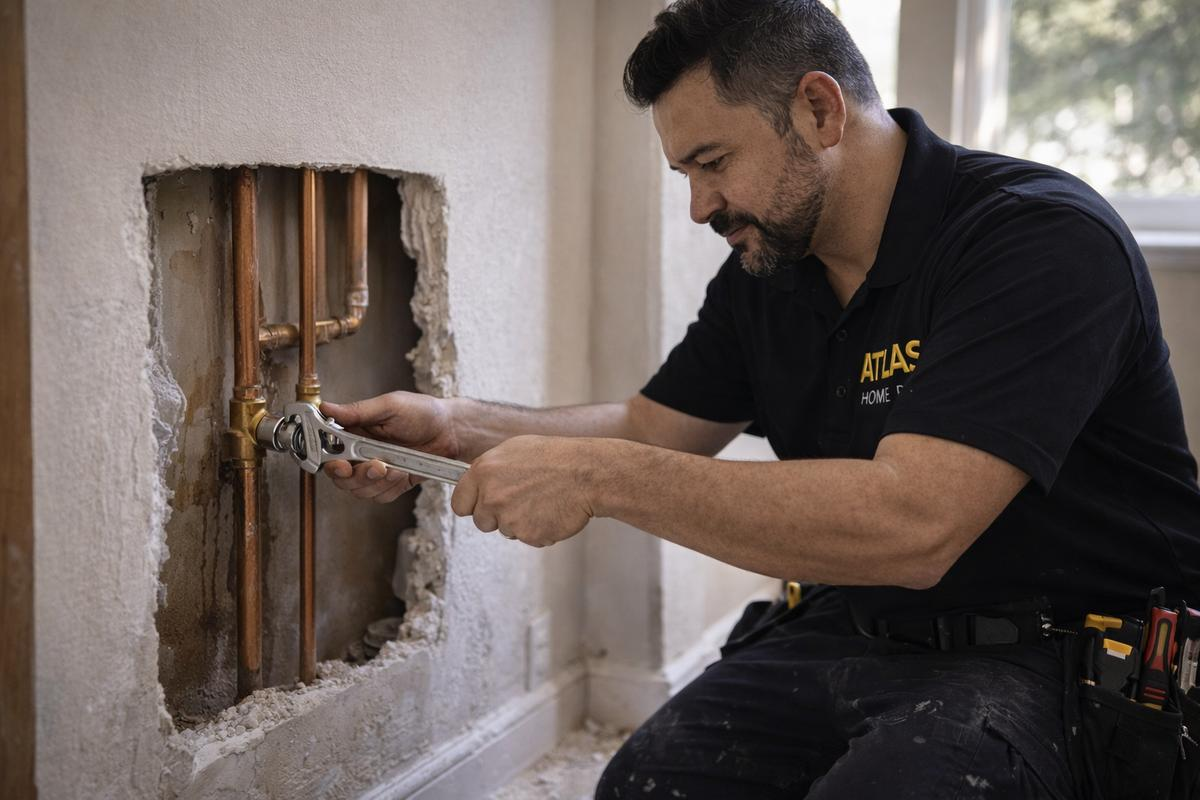
A professional Wasserrohrbruch-Notdienst can help assess an unexpected pipe failure and arrange the appropriate plumbing response.
Emergency situations may require several steps, including isolating the water supply, locating the damaged section, repairing the pipe, and checking the surrounding installation.
Professional assistance is particularly important when the leak is concealed, water continues escaping, or the affected area cannot be accessed safely.
The objective is not simply to stop the immediate leak. It is also to establish why the failure occurred and whether other sections of the plumbing system require attention.
3. The First Actions to Take After Discovering Water Damage
Knowing what to do before professional assistance arrives can help limit the consequences of a plumbing emergency.
Turn Off the Water Supply
Locate the main stopcock and close it to prevent additional water from entering the damaged pipework. If the leak comes from a particular appliance or fitting, its individual isolation valve may also be useful.
Protect Electrical Safety
Water near electrical sockets, appliances, and exposed wiring presents a serious hazard. Never enter a flooded area if electrical installations may be affected. Isolate the electricity from a dry, safe location only when possible. Otherwise, contact a qualified electrician or emergency service.
Move Furniture and Personal Belongings
If it is safe, remove electronics, documents, carpets, furniture, and valuable possessions from affected rooms. Items that cannot be moved should be protected from additional moisture where practical.
Record the Damage
Take photographs and videos of wet surfaces, damaged belongings, and visible leaks. Keep records of emergency repairs and relevant communications, as these may be useful when dealing with an insurance provider.
Arrange Professional Assistance
Once immediate safety measures have been taken, contact an appropriate plumbing professional to identify and repair the source of the water escape.
4. Understanding the Different Types of Water Damage
Not all water damage affects buildings in the same way. The extent of the problem depends on the amount of water, the duration of exposure, and the materials involved.
Surface damage: Water may damage carpets, wooden flooring, furniture, and decorative finishes. Even when the visible moisture appears limited, water can penetrate underneath these materials.
Wall and ceiling damage: Moisture can enter plasterboard, plaster, insulation, and internal building cavities. This may cause discolouration, bubbling paint, and weakened surfaces.
Structural moisture: Prolonged exposure can affect wooden components and other moisture-sensitive materials. These areas may require professional inspection and drying.
Electrical damage: Water reaching electrical installations can create dangerous conditions and may damage appliances or wiring.
Understanding the type of damage helps determine which restoration measures are necessary after the plumbing problem has been resolved.
5. How Professional Water Damage Assessment Works
Finding the source of a leak is not always straightforward. Water can travel away from the damaged pipe before appearing on a visible surface.
For example, a wet patch on a living room ceiling might originate from a leaking bathroom connection on the floor above. Simply repairing the area where moisture appears would not address the actual cause.
A professional assessment may involve several inspection techniques.
- Moisture measurement: Specialised meters help determine the moisture content of affected building materials.
- Thermal imaging: Infrared equipment can reveal temperature differences associated with potential moisture problems.
- Acoustic inspection: Listening devices can help locate escaping water inside concealed pipework.
- Visual inspection: Technicians examine accessible plumbing connections, walls, ceilings, and flooring.
- Pressure testing: Suitable sections of the plumbing system can be checked for pressure loss.
The inspection method depends on the building and the nature of the suspected damage. Accurate assessment helps prevent unnecessary demolition and makes it easier to plan effective repairs.
6. Wasserschaden: Why Drying Must Not Be Delayed
Stopping a leak is only the first part of resolving a water emergency. Moisture can remain inside walls, floors, insulation, and other building materials long after the damaged pipe has been repaired.
A Wasserschaden may therefore require additional assessment and professional drying, particularly when water has spread beyond the immediately visible area.
The drying process depends on the materials involved and the amount of moisture present. Professional restoration specialists may use air movers, dehumidifiers, and moisture-measuring equipment to manage the process.
Several factors determine how extensive the restoration work needs to be:
- The amount of water released.
- How long the affected area remained wet.
- The type of flooring and wall materials.
- Whether insulation has absorbed moisture.
- The accessibility of concealed building cavities.
- The presence of persistent dampness or mould.
In some situations, damaged materials may need to be removed because they cannot be adequately dried or restored.
Proper moisture assessment is important before decorative repairs begin. Covering a damp surface with fresh paint or flooring can conceal an ongoing problem rather than resolve it.
7. Does Home Insurance Cover Water Damage?
Insurance coverage depends on the policy, the cause of the damage, and the circumstances surrounding the incident.
Some policies cover sudden and accidental water damage caused by burst internal pipes, while other situations may involve exclusions or specific conditions.
For property owners, it is useful to understand the difference between repairing the damaged pipe and restoring the resulting building damage. These costs may be treated differently under an insurance agreement.
After discovering a serious leak, homeowners should:
- Notify their insurance provider as soon as reasonably possible.
- Photograph all visible damage.
- Keep receipts for emergency work and temporary protection.
- Save inspection reports and repair documentation.
- Avoid disposing of damaged belongings before documenting them, where practical.
- Follow the insurer’s instructions regarding restoration work.
Never assume that every plumbing-related expense is automatically covered. Reviewing the policy and discussing the circumstances with the insurer can help avoid misunderstandings.
8. Practical Ways to Prevent Future Water Damage
Preventive maintenance can reduce the likelihood of unexpected plumbing failures.
Homeowners should periodically inspect visible pipework, particularly beneath sinks, around water heaters, and near washing machines and dishwashers.
Other useful precautions include:
- Replacing deteriorated hoses and damaged seals.
- Protecting exposed pipes during freezing weather.
- Investigating unexplained increases in water consumption.
- Monitoring changes in water pressure.
- Arranging inspections of ageing plumbing systems.
- Keeping the main water shut-off valve accessible.
- Checking visible connections for corrosion or moisture.
Property owners should also pay attention to small damp patches and unusual plumbing sounds. Addressing these warning signs early can prevent more extensive damage.
Conclusion
Water damage can develop quickly and create problems that extend far beyond the original plumbing failure. A burst pipe may affect flooring, furniture, walls, electrical installations, and other important parts of a property.
The most effective response begins with immediate safety precautions and shutting off the water supply. Professional assistance then helps identify the source of the leak, complete the necessary repairs, and determine whether additional drying or restoration work is required.
Regular plumbing inspections and early attention to warning signs can also reduce the risk of future emergencies.
Ultimately, protecting a property from water damage requires more than fixing a leaking pipe. It involves understanding how moisture spreads, responding quickly, and ensuring that both the plumbing system and affected building materials are properly assessed.