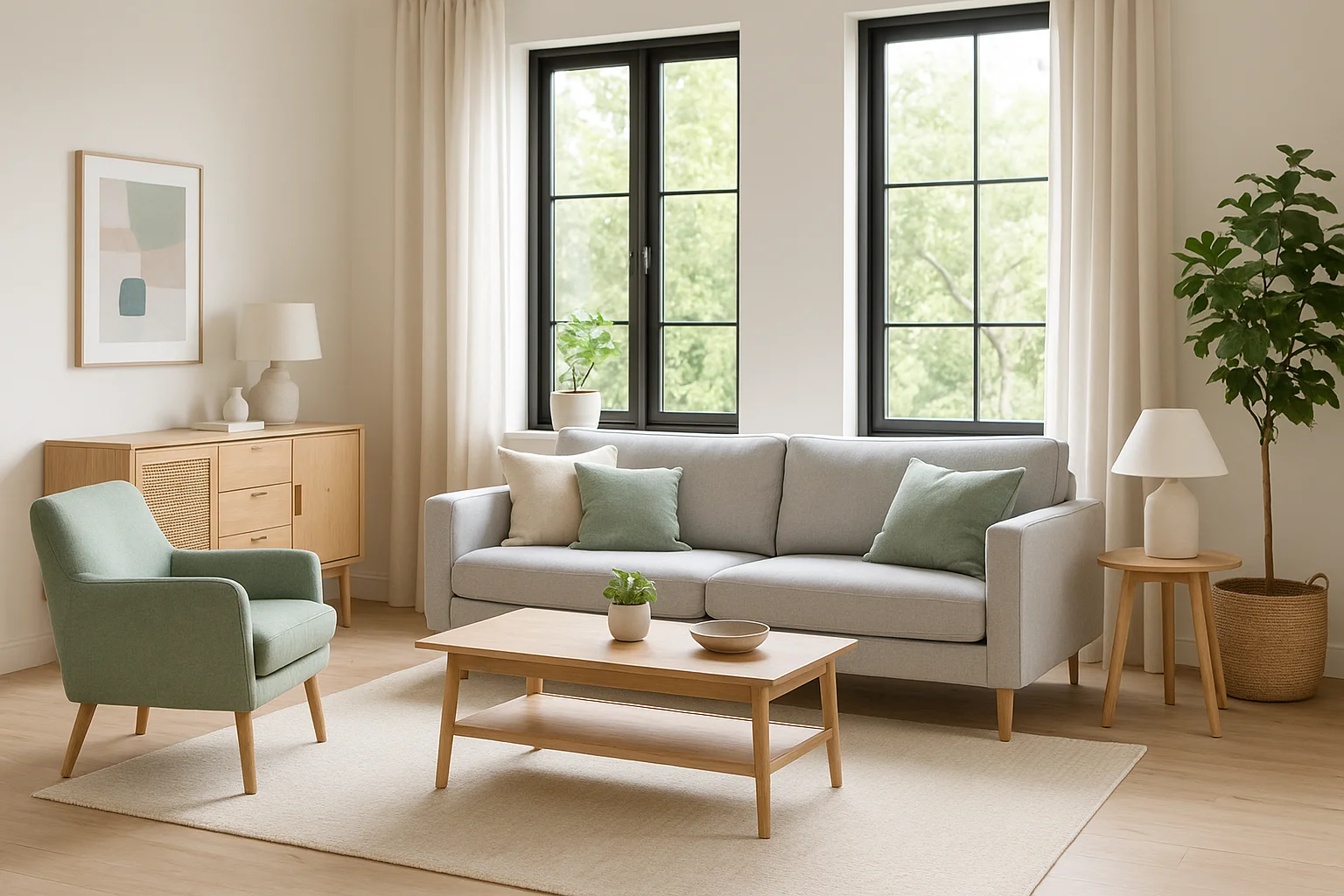
The modular sofa category has changed a lot in the last few years. What used to mean “expensive, impractical, and vaguely futuristic” now describes some of the most practical furniture you can buy — especially if you move often, want flexibility in your living room layout, or need a sofa that can actually be cleaned.
Add washable covers to the mix, and you have a category of furniture that solves problems most sofas don’t address at all.
Here’s how modular sofas with washable covers actually work, what to look for, and why the combination of these two features matters more than it might seem.
What “Modular” Actually Means
A modular sofa is one that breaks down into individual seat and back units that connect to each other. The key distinction from a standard sectional is that the connections are designed to be undone — not just once during delivery, but regularly, whenever your layout needs to change.
The practical difference comes down to the connection system:
Tool-free connections mean you can separate and reconnect pieces by hand in minutes. This is what makes modularity actually useful day-to-day rather than theoretical. If reconfiguring requires a screwdriver or an Allen wrench, most people won’t do it.
Clip, interlock, or magnetic systems are the common tool-free approaches. The best ones hold pieces firmly together without gaps or height mismatches between units, while still releasing cleanly when you want to rearrange.
Standardized modules matter for expandability. A true modular system uses the same connection points across all pieces, so you can add a new seat section later and it connects the same way as the original units.
What “Washable Covers” Actually Means
The phrase “washable” covers a wide range of things in furniture marketing. Here’s what the terms actually mean:
Spot clean only — this isn’t washable. It means wiping with a damp cloth, which handles surface spills but doesn’t deep clean the fabric.
Dry clean recommended — the covers technically come off, but require professional cleaning. This defeats most of the practical benefit.
Machine washable — the covers fully unzip, go into a standard home washer, and come out without damage. This is the real standard.
Within machine-washable covers, the specifics matter:
- Cold wash vs. hot wash — covers designed for cold wash and air dry last significantly longer. Heat is what causes fabric shrinkage and color fade over repeated cycles
- Wash cycle durability — the meaningful number is how many wash cycles the cover has been tested for with no color fade or fabric shrinkage. Brands that publish this data (some test to 100 cycles on cold wash/air dry protocols) are worth taking seriously. Brands that don’t publish testing data are harder to evaluate
- Removal time — a modular sofa with washable covers designed for real life should have covers you can fully remove in a couple of minutes on a 3-seater. Systems that take 20–30 minutes don’t get used regularly
Why the Combination Matters
Modular and washable solve different problems, but they work together in ways that matter:
Modularity solves the layout problem. You move, your space changes, your needs change — the sofa adapts. Individual modules that break down for moving fit through doors and stairwells that full sectionals don’t. This is the feature renters and frequent movers specifically need.
Washable covers solve the maintenance problem. A sofa you can deep clean is one you’ll actually keep clean. The barrier to washing the covers is low enough that it becomes part of normal household maintenance rather than a special event.
Together, they solve the longevity problem. A modular sofa you can reconfigure means you’re not buying a new sofa every time you move. Washable covers mean the sofa still looks good five years in. The combination extends the useful life of the furniture significantly — both in terms of function and appearance.
What to Look for When Shopping
Connection system quality — Ask exactly how modules connect. Test it in person if possible, or look for video demonstrations. A connection that feels loose or leaves gaps between modules will bother you every day.
Cover removal process — How does it actually work? Full zipper removal across all cushions and back sections is the standard. Find out how long it takes on a full-size configuration.
Wash protocol — Cold wash and air dry is what you want. If the care instructions say “dry clean only” or “professional cleaning recommended,” the washability claim is marketing rather than a practical feature.
Published durability data — Has the brand tested the covers to a specific number of wash cycles? This separates brands that have actually engineered for washability from those that use the term loosely.
Replacement parts availability — Can you buy replacement covers and cushion inserts separately? This matters for long-term ownership. A sofa system where parts can be replaced individually lasts much longer than one where damage means replacing the whole piece.
Weight per module — Modularity is only practical if the pieces are moveable. Modules over 60 lbs are difficult to rearrange solo. This matters if you’re buying for a space you manage by yourself.
Assembly and delivery options — This is worth asking about before you buy, not after. We had a customer who received his sofa and found he couldn’t assemble it himself — the modules were heavier than he expected and his space was difficult to work in. We ended up arranging white glove delivery to get it set up properly, but it was a friction point that could have been avoided. If there’s any chance your space or physical situation makes assembly tricky, ask the brand upfront whether white glove or in-home setup is available, and what it costs.
The Practical Upside
The case for a modular sofa with washable covers comes down to a simple calculation: furniture that can adapt to your space and that you can actually keep clean is furniture you’ll own longer and enjoy more.
The combination used to be difficult to find — modular sofas tended toward the impractical end of the market, and washable sofas were an afterthought in most furniture categories. That’s shifted. The category now includes well-built options across price ranges that deliver on both features without compromising on comfort or design.
If you’re furnishing a space where either flexibility or maintenance is a real consideration — which describes most homes — the modular-plus-washable category is worth looking at before defaulting to a standard sofa.
A Few Things Worth Knowing Before You Buy
Seat height matters more than it sounds. A 19-inch seat height is accessible and easy to get up from. Very low sofas (under 16 inches) can be difficult for older buyers or anyone with mobility considerations.
Depth affects how the room feels. A deep-sink sofa (over 40 inches deep) makes a small room feel more crowded and can be difficult for shorter people to sit in comfortably. Compact-depth sofas (under 36 inches) work better in smaller spaces.
Check the frame, not just the fabric. Washable covers are only useful if the frame underneath holds up. Look for hardwood or kiln-dried wood frames rather than particleboard or MDF.
US shipping only is common in this category. Many of the best modular sofa brands currently ship within the US only. If you’re outside the US, verify shipping availability before spending time on a configuration.
The modular-plus-washable category rewards buyers who do a bit of research upfront. The features that matter most aren’t always the ones most visible in marketing — but once you know what to look for, the difference between a sofa that lasts and one that doesn’t is fairly straightforward to identify.