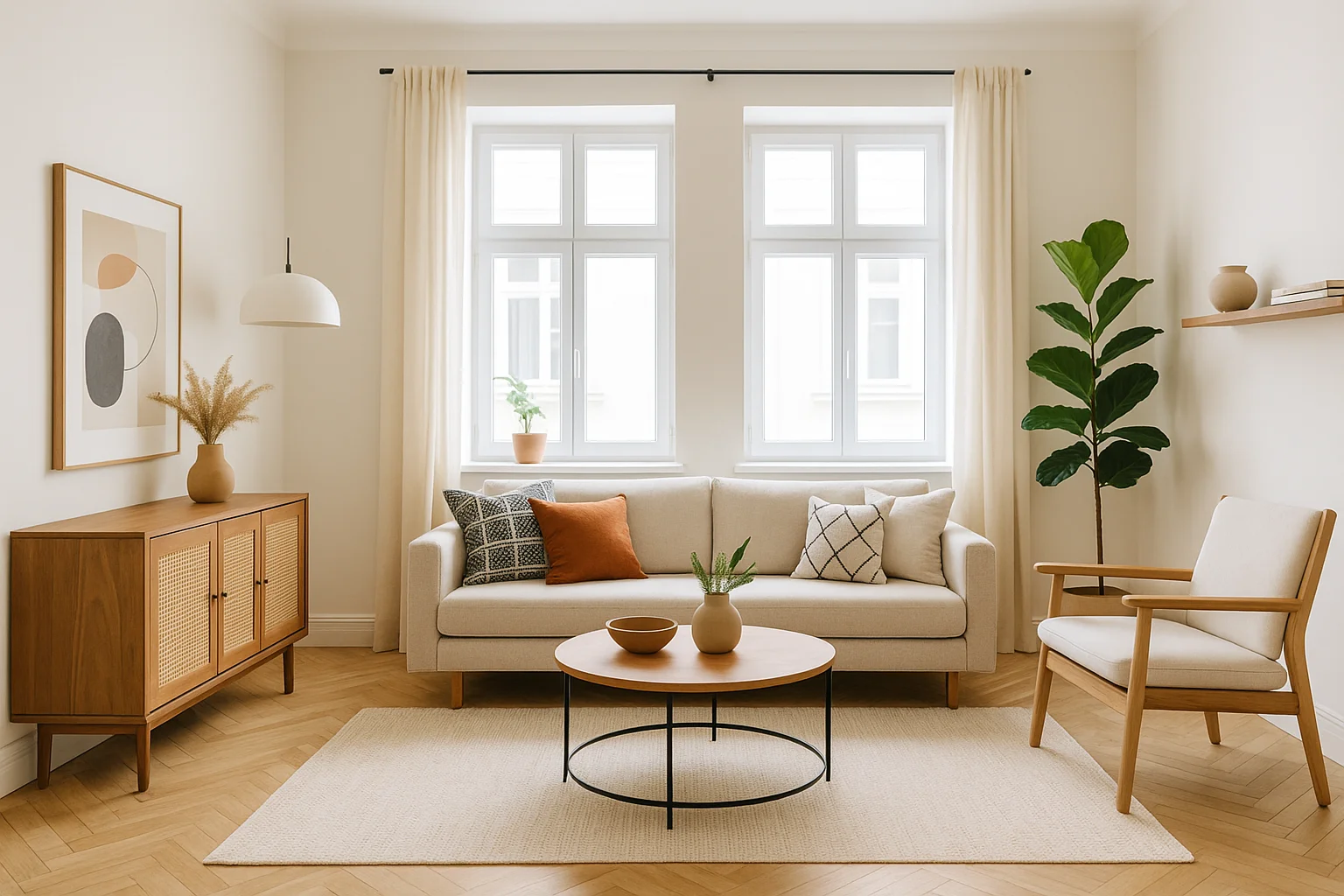
Good lighting is not only about making a room brighter. It also influences how large the space feels, where the eye naturally travels, and whether an interior feels flat or thoughtfully layered.
Wall sconces are particularly useful because they introduce light at eye level without requiring space on a floor, desk, console, or bedside table. That makes them equally valuable in compact apartments and larger homes where the goal is to create a cleaner, more intentional lighting scheme.
From bedrooms and living rooms to hallways and dining spaces, here are seven practical ways to use wall-mounted lighting as part of the overall interior design.
Wall sconces introduce light at a different height while keeping floors and furniture surfaces visually uncluttered.
1. Replace Bedside Lamps in Smaller Bedrooms
Bedside tables are useful, but they can become crowded quickly. A lamp, phone charger, book, glass of water, and alarm clock can leave almost no usable surface.
Moving the light source onto the wall immediately frees up space. A pair of sconces on either side of the bed can also make the sleeping area feel more symmetrical and intentionally designed.
For reading, consider fixtures that direct light toward the bed rather than simply glowing in every direction. Adjustable or swing-arm styles provide even more flexibility because the beam can be moved closer to the book and pushed back toward the wall when it is no longer needed.
Before installation, test the position while sitting in bed rather than choosing the height while standing. A fixture that looks perfectly placed from across the room may produce glare when viewed from a pillow.
2. Frame Artwork or a Mirror
Wall sconces can do more than illuminate a room. They can help organize the composition of the wall itself.
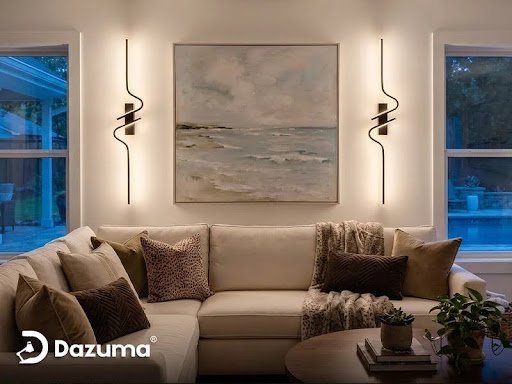
A pair of fixtures positioned around artwork, a mirror, or another focal point creates a visual frame. This approach works particularly well above console tables, around fireplaces, and in dining rooms where a large artwork might otherwise feel disconnected from the surrounding wall.
The sconces do not always need to be identical in visual weight to the object they frame. Slim fixtures can work beside a large mirror, while more sculptural designs can become decorative elements of their own.
Allow enough breathing room between the light and the artwork so the arrangement does not feel crowded.
3. Add Depth to a Living Room
Many living rooms rely on one ceiling fixture and perhaps one floor lamp. The room may technically have enough light, but everything is illuminated from only one or two heights.
Adding wall-mounted light introduces another layer.
Sconces can be positioned beside a fireplace, near built-in shelving, around a sofa wall, or within darker corners where additional floor furniture would feel awkward. When they cast light upward or softly across the wall, they can also make the boundaries of the room feel less harsh.
Homeowners comparing different Wall Sconces can consider not only the fixture’s appearance but also whether it directs light upward, downward, outward, or through a diffusing shade. These differences have a major effect on the atmosphere after installation.
4. Give Narrow Hallways More Character
A hallway is often one of the hardest areas to decorate. There may not be enough width for furniture, and relying entirely on ceiling lighting can make a long corridor feel flat.
Wall sconces provide decoration without reducing walking space.
Several compact fixtures placed along a long wall can establish rhythm and make the hallway feel like a designed transition between rooms rather than unused leftover space.
They can also work alongside framed photographs or artwork. In that case, coordinate the spacing carefully so the lighting and wall décor feel like one composition rather than two unrelated rows of objects.
Projection from the wall matters in narrow areas. Choose a fixture that does not extend so far into the passage that people may brush against it.
5. Create a Hotel-Inspired Layered Lighting Scheme
Well-designed hotels rarely depend on one strong ceiling light. Instead, they combine several sources positioned at different heights.
A bedroom might include ceiling lighting, bedside wall sconces, concealed accent lighting, and a small lamp near a seating area. A hotel lobby may combine pendants, decorative wall lights, table lamps, and architectural lighting.
The same principle works at home.
Instead of asking one fixture to illuminate the entire room, give each light a smaller job. Ceiling lighting can provide general visibility, wall sconces can add warmth around the perimeter, and table or floor lamps can support reading and other activities.
This makes it possible to change the atmosphere according to the time of day. In the evening, the ceiling light can remain off while lower-level fixtures provide a calmer environment.
6. Use Decorative Sconces as Wall Art
Some wall lights are intentionally understated, but others are designed to be noticed.
Sculptural glass, metal, stone-inspired surfaces, unusual geometric forms, and decorative shades can turn a sconce into something closer to illuminated wall art.
This is especially useful on walls where there is not enough room for both art and another piece of furniture. A distinctive wall light can provide visual interest during the day and produce a completely different effect once illuminated at night.
When exploring broader lighting collections from brands such as Dazuma Lighting, consider how the materials of a wall fixture could relate to other elements already in the room, such as cabinet hardware, stone surfaces, furniture finishes, or a chandelier.
The goal is not necessarily to match everything. Repeating one or two materials or finishes is usually enough to establish visual continuity.
7. Make Small Rooms Feel Less Cluttered
Wall-mounted lighting can be particularly effective in small homes because it removes objects from horizontal surfaces.
Replacing a floor lamp with a wall fixture can free up a corner. Removing lamps from bedside tables can make the furniture feel less crowded. Sconces beside a small desk can provide useful illumination without reducing workspace.
This does not physically make the room larger, but it can make more of the floor and furniture surfaces visible. That visual breathing room often helps compact interiors feel calmer and more organized.
Fixtures that cast some light onto the wall can reinforce the effect by reducing dark boundaries around the room.
Pay Attention to Height and Scale
No matter where a wall sconce is installed, proportion is important.
A very small fixture can look insignificant on a wide wall, while an oversized decorative sconce may overwhelm a narrow bedside area. Consider the dimensions of the wall as well as nearby furniture before choosing the fixture.
Mounting height should also reflect how the space is used. A hallway fixture is generally viewed while standing, while bedside lighting is experienced primarily while sitting or reclining. Dining room sconces should be positioned with seated eye level in mind.
Use painter’s tape to mark the approximate dimensions and position of the fixture before installation. This simple test can reveal proportion problems that are difficult to identify from product photos alone.
Think About Light Quality as Well as Style
A beautiful fixture will not feel successful if the light itself is uncomfortable.
Consider brightness, color temperature, beam direction, and whether the light source is visible from common viewing positions. Warm illumination is often preferred in bedrooms and living spaces because it supports a relaxed atmosphere, while dimming can make the same fixture more flexible throughout the day.
If several wall lights are visible within one room, keeping their light color consistent will usually create a more polished result.
Final Thoughts
Wall sconces are valuable because they solve both a practical and a decorative problem. They provide light without occupying floor or furniture space, while giving walls another layer of texture, shape, and visual interest.
The most successful installations begin by deciding what the fixture needs to accomplish. It might replace a bedside lamp, frame artwork, soften a hallway, illuminate a reading area, or simply add another layer to a living room.
Once purpose, scale, placement, and light direction are considered together, wall sconces can make an interior feel more spacious, balanced, and thoughtfully designed without requiring a major renovation.