
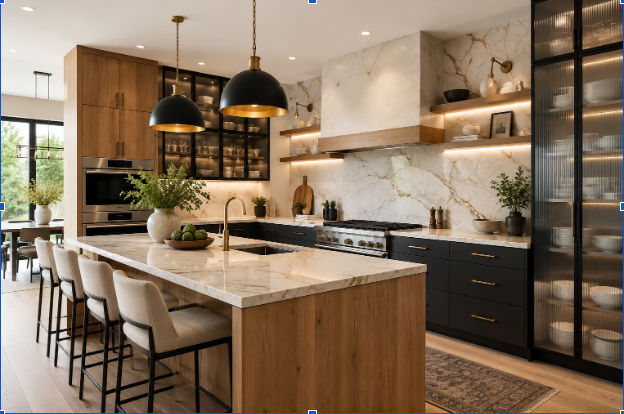
Today’s kitchen designs are moving beyond matching finishes and uniform surfaces. Instead, homeowners are embracing the beauty of combining natural wood, elegant stone, sleek metal, and glass to create kitchens that feel layered, balanced, and uniquely personal.
When thoughtfully combined, these materials complement one another, adding warmth, texture, durability, and visual interest while maintaining a cohesive design. Whether your style leans modern, transitional, Japandi, or contemporary, mixing materials can elevate your kitchen from ordinary to exceptional.
Why Mix Materials?
A kitchen made entirely from one material can sometimes feel flat or monotonous. Combining different finishes creates contrast and depth, helping define focal points without overwhelming the space.
A successful mixed-material kitchen balances:
- Warm and cool elements
- Natural and manufactured surfaces
- Matte and reflective finishes
- Light and dark tones
- Texture and simplicity
The goal isn’t to use more materials—it’s to use the right materials in harmony.
Wood Brings Warmth and Character
Wood remains one of the most timeless materials in kitchen design. It softens modern spaces and introduces natural texture that never goes out of style.
Popular applications include:
- White oak cabinetry
- Walnut kitchen islands
- Floating wood shelves
- Ceiling beams
- Wood range hoods
Natural wood pairs beautifully with nearly every countertop and hardware finish, making it one of the most versatile materials available.
Stone Adds Luxury and Durability
Stone surfaces provide elegance while standing up to everyday use. Quartz remains one of the most popular choices because it combines durability with minimal maintenance, while natural marble and quartzite create dramatic visual impact.
Stone works beautifully as:
- Countertops
- Waterfall islands
- Full-height backsplashes
- Feature walls
Large continuous slabs create a clean, seamless appearance that complements both minimalist and traditional kitchens.
Metal Creates Contrast and Definition
Metal accents introduce structure and sophistication. Rather than dominating the design, they often serve as finishing details that tie the entire space together.
Popular choices include:
- Matte black hardware
- Brushed brass faucets
- Stainless steel appliances
- Bronze cabinet pulls
- Black steel shelving
Mixing two complementary metal finishes can add even more dimension when done consistently throughout the kitchen.
Glass Opens Up the Space
Glass helps kitchens feel lighter and more open. It reflects natural light while breaking up large expanses of cabinetry.
Consider incorporating glass through:
- Display cabinets
- Interior cabinet lighting
- Glass pantry doors
- Decorative partitions
- Modern pendant lighting
Ribbed, frosted, or fluted glass can also introduce subtle texture while maintaining privacy.
Creating Balance Through Contrast
The most successful kitchens don’t simply combine materials—they balance them.
For example:
- Warm white oak cabinetry with white quartz countertops
- Black metal hardware against light wood cabinets
- Marble backsplashes paired with matte cabinetry
- Glass cabinet doors alongside solid wood storage
- Stainless appliances softened by natural textures
Each material plays a different role without competing for attention.
Material Combinations That Work Beautifully
White Oak + White Quartz + Matte Black
A favorite for modern and Scandinavian-inspired kitchens, this combination feels clean, bright, and timeless.
Walnut + Marble + Brass
Rich walnut cabinetry paired with marble countertops and warm brass hardware creates an elegant, luxurious atmosphere.
Painted Cabinets + Natural Wood Island
Using different finishes for perimeter cabinets and the island creates visual interest while making the island a true focal point.
Concrete + Wood + Glass
Perfect for contemporary homes, this mix blends industrial character with natural warmth and openness.
Don’t Forget Texture
Material selection isn’t only about color—texture plays an equally important role.
Mixing smooth quartz, natural wood grain, brushed metal, and textured glass creates subtle visual interest that makes the kitchen feel more inviting.
Even within a neutral color palette, varied textures prevent the space from feeling sterile.
Quality Craftsmanship Makes the Difference
Beautiful material combinations only reach their full potential when every cabinet, joint, finish, and installation detail is executed with precision.
At Mastery Cabinetry, we help homeowners design custom kitchens that thoughtfully combine premium materials for lasting beauty and functionality. From selecting complementary finishes to building custom cabinetry tailored to your lifestyle, our team creates kitchens where every detail works together seamlessly.
Whether you’re planning a warm modern kitchen, a timeless transitional design, or a minimalist Japandi space, the right mix of wood, stone, metal, and glass can transform your kitchen into a space that’s both visually stunning and built to last.


Pingback: Wood Elevates Kitchen Design