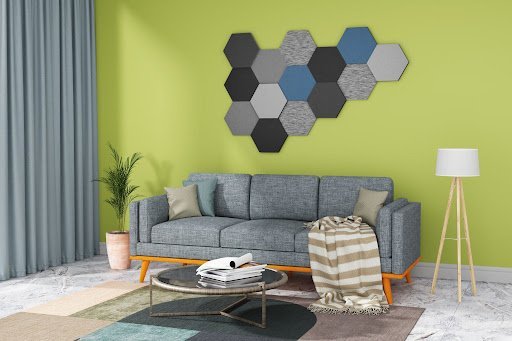
Small living rooms are one of the most common interior design challenges-and also one of the easiest to improve without any renovation work. You don’t need to break walls, hire contractors, or spend a large budget to make a compact space feel open and comfortable. With the right mix of layout planning, colour choices, lighting, and visual balance, even a 120 sq ft living room can feel noticeably larger and more inviting.
Today, many homeowners also use a 3D modeling service before making design decisions because it helps them visualize how furniture, colors, and layouts will actually look in the space. This makes it easier to avoid mistakes and create a more spacious and well-balanced living room from the start. Here’s exactly how to do it.
1. Start With the Right Furniture Scale
The biggest mistake people make in small rooms is cramming in full-size furniture. A bulky three-seater sofa against the wall doesn’t make a room feel cosy – it makes it feel trapped.
What to do instead:
- Choose sofas with exposed legs – they lift the visual weight off the floor
- Use a loveseat or a two-seater with a matching accent chair instead of a three-piece suite
- Pick a slim-profile coffee table (glass or acrylic is ideal – it disappears visually)
- Avoid anything with thick arms, deep cushions, or heavy skirts that touch the floor
A good rule of thumb: furniture should take up no more than 60% of your floor space. Leave breathing room around pieces. It sounds counterintuitive, but less furniture makes a room feel larger, not emptier.
2. Use Light Colours – But Not Just White
Light walls work because they reflect more natural light, which tricks the eye into reading the space as larger. But flat white can feel cold and clinical.
Colour Family
Effect
Best For
Soft white / Cream
Warm, open, airy
North-facing rooms with less light
Pale sage or mint
Fresh, calm, receding
Living rooms that need a natural feel
Light grey
Modern, clean, neutral
Contemporary or minimalist spaces
Blush or soft peach
Warm without being heavy
Smaller flats needing personality
Pro tip: Paint the ceiling the same colour as the walls (or even slightly lighter). A sharp contrast between wall and ceiling makes a room feel lower. A continuous tone makes it float.
3. Maximise Natural Light – Don’t Block It
Light is your best friend in a small room. Here’s how to make the most of what you have:
- Hang curtains from ceiling to floor – even if your windows are small. Floor-length drapes draw the eye upward and make ceilings feel higher.
- Keep window sills clear. Plants and decorations on sills cut off incoming light right at the source.
- Use sheer fabrics rather than heavy blackout curtains during the day. Let diffused light in.
- Add a large mirror opposite your main window. It bounces light across the room and visually doubles the perceived depth of the space.
A well-placed mirror is one of the oldest interior design tricks – and it still works better than almost anything else.
4. Think Vertically, Not Horizontally
Small rooms often feel bigger when you direct attention upward. Horizontal arrangements (low shelving, wide art, squat furniture) make a room feel flat. Vertical arrangements give it height.
Vertical strategies that work:
- Install shelving from floor to ceiling rather than mid-wall
- Use tall, narrow bookcases instead of wide, low ones
- Hang artwork slightly higher than eye level
- Use vertical stripe patterns on an accent wall (subtle, not bold)
- Choose a pendant light or a chandelier that draws the eye up, rather than a wide floor lamp
5. Declutter Ruthlessly – Then Decorate Deliberately
A cluttered small room feels claustrophobic instantly. But the solution isn’t to remove all personality – it’s to be deliberate.
Follow this simple rule: every item in a small living room should have a reason to be there. If it’s decorative, it should be genuinely beautiful. If it’s functional, it should earn its floor (or shelf) space.
What to remove:
- Excess cushions that just get moved to sit down
- Multiple small decorative items that create visual noise
- Rugs that are too small (they shrink a room – go bigger or go none)
- Furniture that isn’t regularly used
What to keep:
- One statement piece of art (large, framed, intentional)
- One quality rug that extends under the front legs of all seating
- Plants – they add life without weight
6. Visualise Before You Buy Anything
Here’s where most people waste money on small-room redesigns: they buy furniture they think will work, and then discover it doesn’t once it’s in the room.
This is exactly the problem that 3D visualisation technology was built to solve. Studios like produce photorealistic 3D renders and AR room placements that let you see exactly how a sofa, shelving unit, or accent chair will look in your actual space – before you spend a penny.
For furniture brands, retailers, and even homeowners working with interior designers, being able to see a room layout in 3D (or place a virtual piece of furniture in your room using your phone’s camera) eliminates the guesswork entirely. You see the scale, the proportions, the colour, and the light interaction in your actual room.
It’s not just a gimmick – it’s a genuinely practical tool for getting a small room right the first time.
Quick Reference: Small Living Room Rules
Do This
Avoid This
Use light, warm wall colours
Dark, heavy feature walls
Choose furniture with legs
Fully skirted, floor-length sofas
Hang curtains ceiling to floor
Short curtains that cut windows in half
Place one large rug under all seating
Small rugs that float in the middle
Use vertical shelving and art
Low, wide horizontal arrangements
Declutter to essentials only
Too many small decorative items
Use mirrors to reflect light
Blocking natural light sources
Final Thought
You don’t need more space. You need to use the space you have more intelligently. Colour, scale, light, and layout are free tools – and when you combine them with a clear vision of what you want, even the smallest living room can feel like a room worth staying in.
Start with one change. See what it does. Then keep going.