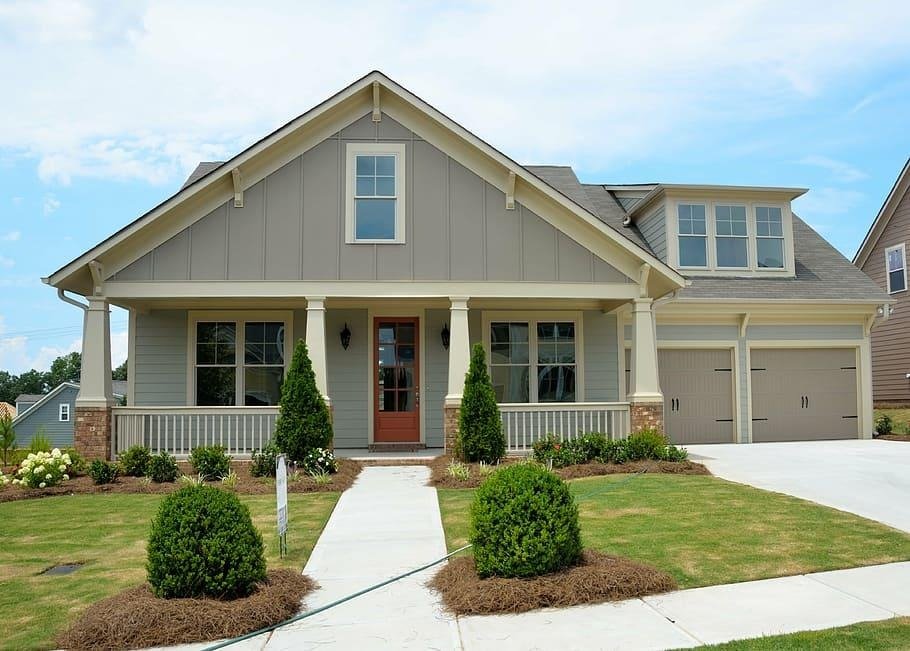
A modern front porch lives or dies by what gets left out. The temptation is always to fill the space — seasonal wreaths, rocking chairs, multiple planters, layered doormats, decorative signs, string lights, lanterns, and the slow accumulation of small touches that feel charming individually and chaotic collectively. Traditional porches absorb that layering reasonably well. Contemporary porches do not. The same architectural restraint that makes modern homes powerful also makes their entry spaces less forgiving of clutter. Styling a modern porch effectively is largely about resisting the urge to add and learning to compose with fewer, better pieces.
Why Modern Porches Look Cluttered Faster
Modern architecture works through subtraction. Clean siding lines, large unbroken wall planes, restrained trim, and a limited palette of finishes produce the calm visual reading that defines the style. Every additional object placed against that backdrop registers more strongly than it would on a busier traditional facade. A single mismatched planter on a Victorian porch is one detail among many. The same planter on a flat-roofed modern porch becomes a focal point — and not in a good way.
This is why modern porches feel cluttered with surprisingly little on them. The threshold for visual noise is lower. Three or four well-coordinated objects can populate a porch successfully; six or seven, even tasteful ones, often start to fight each other. The discipline is to choose pieces that share a coherent finish family, scale, and material vocabulary, then stop adding before the composition fills up.
Start With What the Porch Actually Needs
Most porch styling problems stem from decorating before deciding what the porch is for. A porch that gets used for occasional sitting needs different elements than one that functions purely as a passage between the door and the driveway. Be honest about how the space actually gets used. If no one sits on the porch in practice, two large chairs and a side table are taking up floor area without earning it. If the porch is wide enough to support a real seating moment, then those pieces deserve the room.
A short list of useful, intentional elements tends to outperform a long list of decorative ones. A doormat sized correctly to the door. One or two structured planters. A pair of seats only if the space supports them and they will get used. Lighting that already serves a function. A piece of signage near the entry. That is usually enough — sometimes more than enough — to produce a porch that reads as warm without becoming busy.
What Welcome Signs Fit Modern Porch Design Best?
Modern porch design depends on balance, spacing, and exterior decor that supports the architecture instead of competing with it. Oversized decorative phrases, distressed finishes, and crowded seasonal accessories often make contemporary entryways feel visually fragmented. Clean typography, restrained color palettes, and durable materials create a stronger connection between the porch, front door, lighting, and surrounding facade elements.
Many homeowners choose modern welcome signs because contemporary signage introduces personality without disrupting minimalist exterior styling. Simple lettering and neutral finishes work alongside black-framed windows, matte hardware, wood accents, and modern farmhouse details without overwhelming the entry sequence. Vertical porch signs create height near narrow doorways, while horizontal signs integrate naturally beside seating areas, planters, or exterior sconces. Material selection also affects the overall impression. Powder-coated metal, painted wood, and acrylic surfaces maintain sharper lines and cleaner finishes than heavily distressed decorative boards.
Typography influences readability as much as aesthetics. Sans-serif lettering keeps the sign visually consistent with contemporary architecture, while excessive script fonts often reduce clarity and introduce unnecessary ornamentation. Spacing around the sign matters as well. Modern entryways feel more intentional when signage shares visual breathing room with lighting, furniture, and planters instead of competing for attention. Consistent finishes across porch decor elements strengthen curb appeal and help the entire exterior feel cohesive rather than assembled from unrelated decorative pieces.
Planters: One of the Few Things Worth Adding
Planters are among the few decorative elements that consistently improve a modern porch rather than crowding it. They introduce living material into an otherwise hard environment, soften the geometry without breaking it, and offer one of the few opportunities to bring color into a restrained palette. The trick is choosing planters that respect the architectural language rather than fighting it.
Shape and Material
Cylindrical, square, and tapered geometric planters in concrete, fiberglass, powder-coated metal, or matte ceramic suit modern entries. Avoid heavily textured terra cotta, urn shapes, and ornate decorative pottery — these belong to a different design conversation. Sizing should be confident; one large planter usually beats three small ones, especially flanking a front door.
Plant Selection
Structured plants — boxwood, sansevieria, bird of paradise, ornamental grasses, succulents, dwarf olive — hold their shape and reinforce the architectural feel. Loose, sprawling, or fussy plants undermine that effect. Sticking to one or two plant types across all the planters on the porch produces a more composed result than mixing varieties.
Lighting: Functional First, Decorative Second
Lighting on a modern porch should do real work — illuminating the entry, the address signage, and any seating area — before it does any decorative work. Two flanking sconces in matching contemporary geometry, paired with warm-white bulbs in the 2700K to 3000K range, almost always outperform any combination of string lights, lanterns, and decorative fixtures. The restraint is part of what makes the porch feel modern.
If additional lighting is genuinely needed — a porch that is unusually dark, or a transitional sitting area that doubles as outdoor living space — choose pieces that share the same finish family as the existing sconces. Mixing finish families across lighting fixtures is one of the more common porch styling errors and one of the most visible.
Furniture and Seating
Porch furniture only earns its space if it gets used. Decorative chairs that no one sits in occupy real estate that the porch composition would handle better as open space. If the porch is large enough to support a working sitting area, choose pieces in clean linear silhouettes — teak, powder-coated steel, woven synthetic — and limit the count. Two chairs and a small side table read more confidently than a four-piece conversation set wedged into too small a footprint.
Cushions and outdoor textiles are where homeowners most often introduce visual noise. A neutral cushion palette in two or three tones produces a calmer result than the busy patterns and seasonal swaps that accumulate on traditional porches. The same restraint applies to outdoor rugs — solid colors or simple geometric patterns hold up better than busy prints against modern architecture.
The Porch as an Outdoor Room
A well-styled modern porch increasingly functions as the front-of-house equivalent of the outdoor rooms that have reshaped backyard design. The same principles that make a backyard outdoor room feel composed — coherent material palette, intentional lighting, restrained accessory count — apply equally to the front porch. For homeowners thinking about how outdoor spaces hold together as composed rooms rather than collections of objects, this look at the rise of the outdoor room and modern backyard design walks through the discipline that produces that result.
Coordinating the Porch With Curbside Hardware
A modern porch sits within a larger entry sequence that includes the walkway, the driveway, and any curbside hardware visible from the front. The mailbox, in particular, is part of that composition whether the styling acknowledges it or not. Coordinating the mailbox finish with the rest of the porch hardware extends the design language all the way to the property line. Homedit published a useful collection of modern mailbox designs that demonstrates how curbside hardware can carry the same restraint and finish coordination that defines a well-styled porch.
A Note on Modern House Numbers
Modern House Numbers extends its architectural focus from address numerals into porch and entry signage as well. The brand’s welcome signs and lettering pieces are produced in clean contemporary typography, durable powder-coated metal construction, and finish options that map onto the most common modern entry palettes — matte black, brushed stainless, satin brass, bronze, white, and aluminum. Float-mount hardware produces the precise shadow lines associated with high-end exteriors, and sizing and orientation options accommodate vertical and horizontal porch conditions. For homeowners building a coordinated porch composition, the catalog tends to deliver a closer fit than the distressed decorative signage stocked at general home goods retailers.
Final Thoughts
Styling a modern front porch without clutter is fundamentally a discipline of editing. Decide what the porch is actually for, choose a small set of pieces that genuinely serve that purpose, coordinate their finishes into a single family, and resist the slow accumulation of decorative additions that accumulates on most porches over time. A pair of structured planters, a clean welcome sign, two well-chosen sconces, an honest doormat, and seating only if it earns its space — that is usually the entire toolkit. Modern porches reward restraint the way modern architecture does, and the porches that look most considered are almost always the ones that say less rather than more.